#Research & Development
Superabsorbent Polymers Meet Fertilizer: Smarter Water and Nutrient Use
How SAP-fertilizer blending saves water, boosts fertilizer efficiency, and protects crops from drought
Introduction: A Double Crisis of Water and Nutrients
Modern agriculture faces a quiet but punishing arithmetic. Up to 60% of applied fertilizer nutrients never reach the plant — they are lost through leaching, volatilization, and runoff. At the same time, increasingly erratic rainfall and prolonged drought mean that soil moisture, the very carrier that moves nutrients to root zones, is becoming unreliable. For farmers and agribusinesses searching for water-saving irrigation solutions and sustainable soil management, one technology is drawing renewed attention: the agricultural superabsorbent polymer (SAP), commonly known as an agricultural water-retaining agent or agricultural hydrogel.
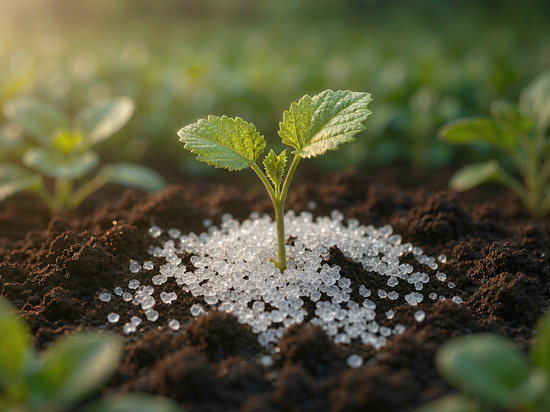
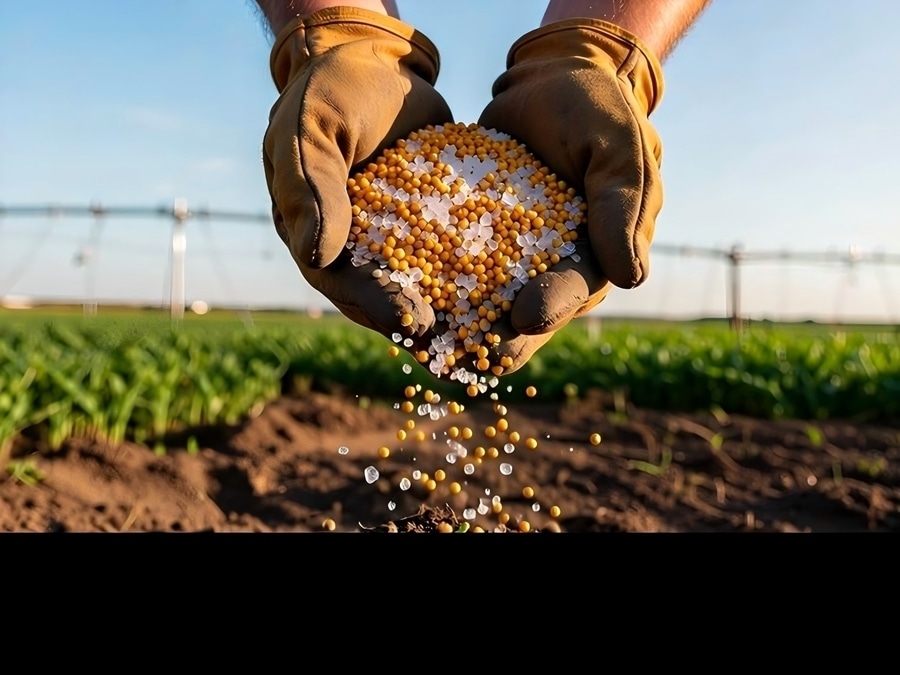
When these water-absorbing polymers are physically blended with fertilizers — a practice known as SAP-fertilizer mixed application or fertilizer-hydrogel blending — the result is a synergistic system that holds water and nutrients together in the root zone, releasing both slowly precisely when crops need them.
What Is an Agricultural Superabsorbent Polymer?
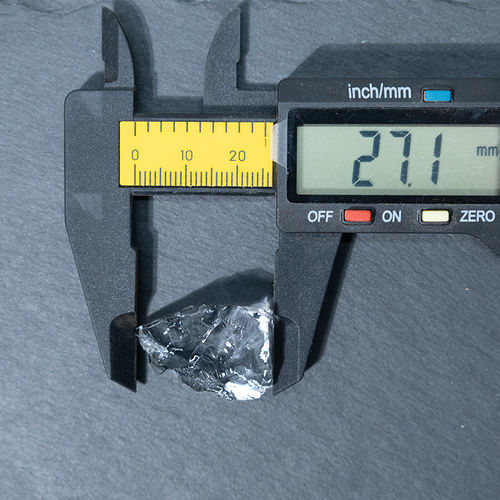
Superabsorbent polymers are cross-linked, three-dimensional polymer networks — most commonly based on polyacrylamide, polyacrylate, or natural polysaccharides such as starch and cellulose — capable of absorbing and retaining water hundreds of times their own dry weight. Unlike a sponge, a soil water retention agent binds water within its gel structure, resisting gravity-driven drainage and evaporation.
In practical terms, one kilogram of a quality agricultural SAP can absorb and hold 200–400 liters of water in the soil profile. Under drought stress, plants can draw upon this reserved moisture, effectively smoothing out the peaks and troughs of rainfall — a cornerstone of drought-resistant farming and dryland agriculture.
The Core Innovation: Fertilizer-Hydrogel Blending
Applying SAP alone improves soil water status. Applying fertilizer alone feeds the crop. But blending the two creates something greater than the sum of its parts — a slow-release fertilizer and soil moisture conservation system in a single pass.
Here is how the science works:
1. Nutrient loading and slow release. Ionic nutrients such as NH₄⁺, K⁺, Ca²⁺, and Mg²⁺ are held within the hydrogel network through adsorption and ion exchange, rather than dissolving freely into soil solution. They are then released gradually over weeks as plants deplete the surrounding moisture — cutting leaching losses substantially and raising fertilizer use efficiency (FUE).
2. Water-nutrient coupling. Nutrient uptake is fundamentally water-dependent. By keeping plant-available water in the root zone, SAP ensures that dissolved nutrients remain mobile and accessible exactly where fine roots are actively absorbing — improving nutrient uptake efficiency under both normal and water-stressed conditions.
3. Reduced volatilization and runoff. For nitrogen in particular, hydrogel encapsulation reduces ammonia volatilization and nitrate washing into groundwater. This directly addresses the environmental costs of over-fertilization and supports precision agriculture and environmentally sustainable farming goals, including compliance with the EU Nitrate Directive.
Field Evidence: What the Numbers Say
Across global trials, the pattern is remarkably consistent:
- Water savings of 20–50% in irrigated systems, with irrigation intervals extended significantly in sandy and loamy soils.
- Fertilizer rate reductions of 15–30% with equivalent or better yields, thanks to higher nutrient recovery.
- Yield gains of 10–25% in drought-prone and semi-arid regions for crops including wheat, maize, cotton, potatoes, and vegetables.
- Improved seedling survival in afforestation and transplanting — often the difference between replanting costs and a uniform stand.
For sandy soils, which can lose more than half of applied water and nutrients below the root zone, the soil conditioner effect of SAP is especially valuable: the hydrogel increases water-holding capacity and cation exchange capacity simultaneously.
Practical Application: Getting the Blend Right
Success with SAP-fertilizer mixed application depends on sound agronomy:
- Dosage: Typical field rates range from 15 to 75 kg/ha depending on soil texture, rainfall, and crop; sandy soils sit at the higher end.
- Blend compatibility: SAP works well with most granular NPK fertilizers; avoid direct blending with strongly acidic or highly water-soluble quick-release products that can collapse the gel network prematurely.
- Placement matters: Banding or hole application in the active root zone consistently outperforms broadcast spreading.
- Repeat application: Most synthetic SAPs remain effective in soil for 2–4 seasons; natural polymer-based products biodegrade faster and suit organic production systems.
Manufacturers are now pushing the category further with controlled-release fertilizer coatings that integrate hydrogel layers, and bio-based SAPs from cellulose, chitosan, and starch that address biodegradability concerns — a fast-growing segment within smart agriculture inputs and soil health products.
Why It Matters for European and Global Agriculture
For European growers confronting tighter water allocations, rising fertilizer prices, and tightening environmental regulation, SAP-fertilizer blending offers a rare trifecta: lower input costs, higher productivity per drop and per gram of nutrient, and a measurable reduction in nutrient pollution. In the broader frame of climate-smart agriculture and sustainable crop production, it is one of the few technologies that pays for itself in the first season while building soil performance over multiple years.
Conclusion: Small Polymer, Large Leverage
The agricultural water-retaining agent is no longer a laboratory curiosity. Mixed intelligently with fertilizer, it transforms the root zone into a self-regulating reservoir of water and nutrients — conserving moisture, stretching every kilogram of fertilizer further, and giving crops a measurable buffer against drought. As water scarcity tightens and nutrient efficiency becomes a regulatory and economic imperative, SAP-fertilizer blending stands out as a pragmatic, proven, and scalable solution for the future of farming.