#Industry News
Fire Reserve and Flexible Tank for Remote Homes
Fire Tank on Remote Land: How to Protect Your Home and Crops
Secure your buildings, warehouses, and crops by installing a flexible fire tank compliant with firefighter requirements.
Increasingly long and intense droughts significantly raise the risk of wildfires, which can lead to true disasters. Living near woods, forests, or in dense vegetation requires heightened vigilance. Many buildings and homes are isolated, with difficult access. Having a permanent water reserve provides critical safety. A flexible fire tank is a simple, effective solution, provided it complies with safety standards. Regulations, tank choice, installation, inspections… here’s everything you need to know.
What Are the Regulations for Fire Tanks?
There is no single national rule. The mayor of each municipality is responsible for external fire defense (DECI) under Article L2213-32 of the French General Code of Local Authorities.
Fire Rules and Inspections: A Partnership Between the Municipality and the SDIS
The mayor defines, through a municipal DECI decree, how fire protection is organized in the community. The mayor must:
Provide the Departmental Fire and Rescue Service (SDIS) with the full list of local water points available for firefighting.
Ensure this list is always up to date.
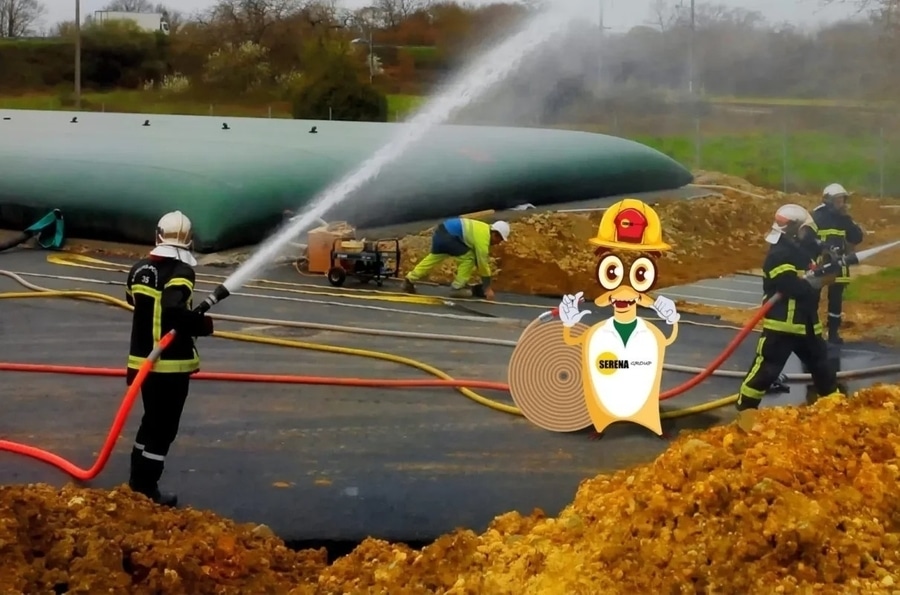
Organize regular technical inspections of these water points: verifying volume, flow, and pressure. These checks are carried out by SDIS teams.
Immediately inform the SDIS if a water point becomes unavailable.
Key Obligations for Installing a Fire Tank
Before installing a fire tank, you must consult both the municipal decree and your local SDIS to know exactly what is required depending on the risks (isolated home, farm, warehouse, livestock, etc.). In general, requirements include:
Compliance with technical standards: NF S 61-213 (hydrants and fire standpipes) and NF EN 14 284 (hydrants).
Tank availability and exclusivity: it must always be available for firefighters. If shared with rainwater recovery, a sealed reserved volume is mandatory.
Easy, permanent access for firefighting vehicles.
A suction connection: the number of 100 mm outlets depends on tank volume (1 outlet below 120 m³, 2 outlets above).
Complete, visible signage.
A volume suited to the site.
Why Choose a Flexible Fire Tank?
There are four main types of fire reserves:
Underground tanks: usually large steel tanks.
Above-ground tanks: silos or rigid elevated reservoirs.
Open-air reservoirs.
Flexible tanks.
The flexible tank offers several advantages for remote land or agricultural sites:
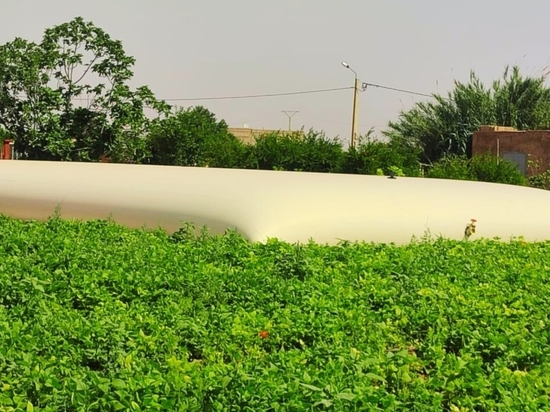
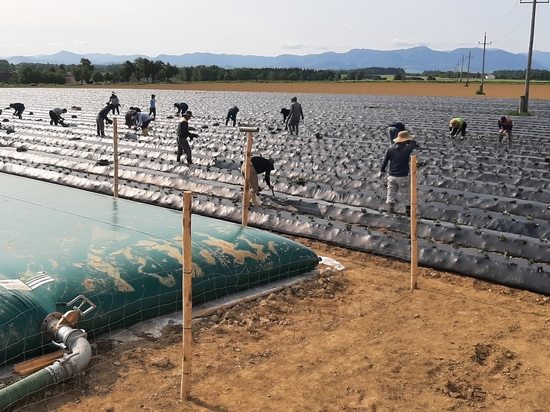
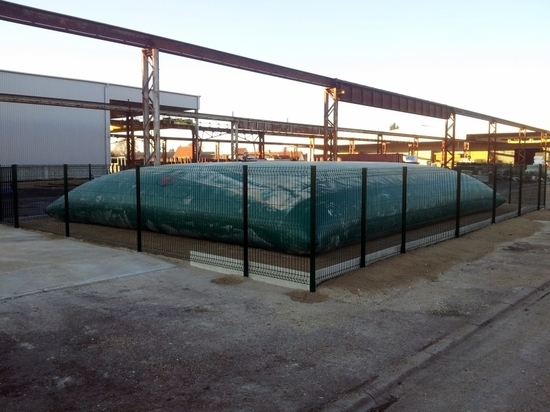
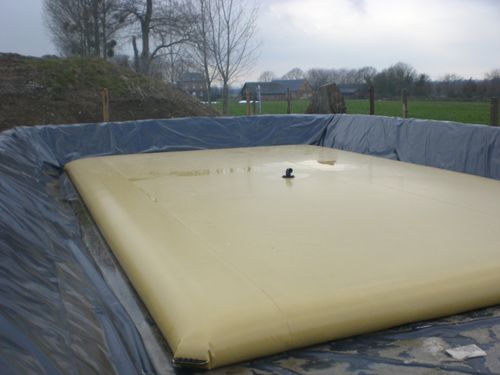
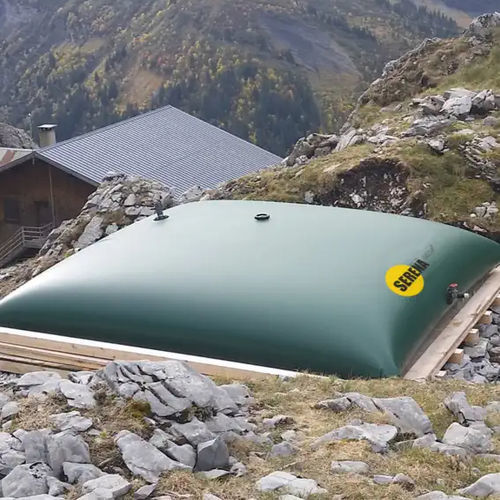
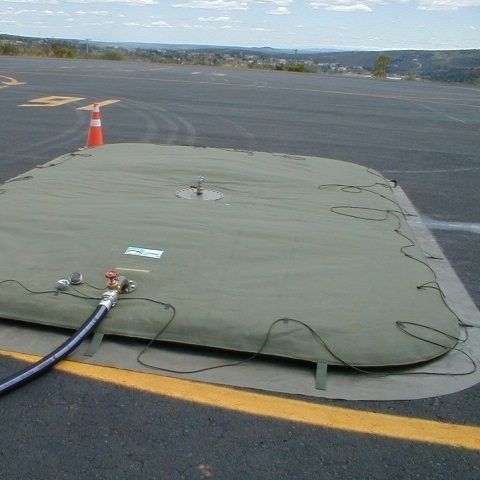
Easy installation: no excavation or heavy lifting required. Just prepare a flat surface, add a ground mat, unroll the tank, connect, and fill.
High strength: technical fabrics, UV resistance, extreme temperature tolerance (up to 70°C), and excellent watertightness.
Maximum safety: closed volume, lockable valve, dedicated firefighter coupling.
Flexible use: the fire reserve can coexist with rainwater storage for irrigation or livestock (excluding the sealed fire volume). Tanks can also be linked in series if SDIS requires higher volumes.
Custom volumes: at SERENA, fire tanks are available from 30 m³ to 2,000 m³.
Cost efficiency: far cheaper than rigid steel or concrete tanks.
5 Tips for Maximum Compliance and Fire Readiness
Consult the SDIS to define the right tank volume.
A remote home usually requires at least 30 m³. Depending on building size and identified risks, up to 120 m³ may be required.
A farm or storage hangar often requires 120–240 m³.
Industrial or complex sites may need significantly higher volumes.
Choose the right location.
Flat, debris-free ground.
Full year-round access.
Secure from combustibles (hay, fuel, gas, trees).
Safe distance from buildings, ensuring access even if structures burn.
Install firefighter-compatible fittings.
Standard firefighter outlet: usually DSP/Guillemin DN100 (sometimes DN65), confirmed by the SDIS.
Protected valves, independent filling connection (tanker, network, rainwater).
Level control via gauge or marker for reserved fire volume.
Ensure secure access.
Stable road for fire trucks: 3.5–4 m wide, 4 m clearance height, with a flat suction area near the coupling.
Clear signage and reflective markers for night visibility.
Physical protection: posts around valves, fencing to prevent animal damage.
Maintain regularly.
Quarterly visual inspections: check for cracks, abrasions, leaks, water level, valve and fitting condition.
Periodic suction tests with SDIS (annual or biennial): vehicle access, coupling connection, priming, and flow test.
Keep a logbook of all checks, maintenance, repairs, and SDIS reports — useful for insurance.
Weather protection: while tanks withstand freezing, fittings (valves, gauges) should be insulated.
Flexible Fire Tank: A Lifesaver for Remote Properties
On remote land, a fire tank is a true life insurance for homes, crops, and farm buildings. The flexible fire tank is a highly practical solution, allowing installation within hours while ensuring safety, durability, and cost control.
Need turnkey support? SERENA helps you choose the right tank volume and fittings, fully compliant with local SDIS requirements.