#Industry News
How to Use Hydrogel for Plants: Pots, Beds and Containers
Exact Dosages and Best Practices for Indoor Planters, Raised Gardens, and Outdoor Landscapes
Hydrogel for plants can add a water reserve to potting mix and garden soil. That reserve only helps when drainage, the growing mix, and watering are right. This guide covers pots, hanging baskets, garden beds, and planting holes. You will learn when hydrogel helps, when it does not, and how to mix it into the root zone.
Why does potting soil dry out so fast in pots and baskets?
Potting soil in pots and hanging baskets dries fast because the volume is small and every side faces sun and wind. Root growth, pot material, and the type of mix also change the speed. Unglazed clay pots, for example, lose water through their walls.
Picture two plants on the same balcony. A small hanging basket in afternoon sun can be dry by evening. A large glazed pot nearby stays damp for days. The basket needs more water storage or more frequent watering. The big pot may need better drainage, not more storage.
Very dry potting mix can also repel water. Peat and bark mixes shrink away from the pot wall, so water runs down the gap and out the bottom. The surface looks watered, yet the root ball stays dry. Soaking the pot or using one of the soil wetting agents fixes this better than hydrogel.
If you want to know how to keep potting soil from drying out, start by checking below the surface to find out why it dries out. Push a finger or a moisture meter into the mix to check its actual moisture level. Then water slowly and watch whether the mix absorbs the water or the water drains straight through.
Learn More: Overcoming Soil Challenges with SOCO Soil Wetting Agents
What is soil hydrogel, and when does it help?
Soil hydrogel is a superabsorbent polymer, or SAP, made for growing plants. The granules absorb water, swell into a soft gel, and release part of that water as the mix dries. Roots draw on the gel and on the moist soil around it.
How much water the gel holds depends on water quality, soil pressure, and fertilizer salts. A glass of swollen crystals tells you little about a real pot. For a fuller introduction, read what is agricultural hydrogel.
Where hydrogel tends to help
Hydrogel is most useful where water drains away faster than plants can use it. Typical cases are small pots, hanging baskets, window boxes and sandy beds in sun or wind. Hydrogel can also support new plantings while their roots spread into the surrounding soil.
Where hydrogel does not help
Hydrogel does not fix a pot that stays wet. In heavy clay or a container with blocked drainage holes, extra water storage can reduce air around the roots. Correct the drainage first. Hydrogel also cannot replace watering, because the gel only refills when irrigation or rain reaches it.
Water crystals for plants versus decorative water beads
Garden water crystals and decorative vase beads can look alike, but they are made for different jobs. Choose soil moisture crystals sold for growing plants, with a label and application instructions. Do not put vase beads or gel taken from diapers into soil.
How do you choose a hydrogel for your plants?
Choosing a hydrogel for plants comes down to three variables: the growing medium, the pot or bed size, and your irrigation water.
Particle size matters for even mixing. Finer granules blend more evenly into small pots and seed trays. Coarser granules are common in beds and larger planting holes, where they stay in place as the soil settles.
Water quality changes how much the gel can absorb. Salts in irrigation water and in fertilizer solutions reduce swelling. If you use hard water or feed often, check this before adding hydrogel for potted plants across a whole collection.
A quick trial helps before you commit. Soak a small amount of granules in your own tap water or feed solution, and the same amount in rainwater. Compare the gel. Then plant a few pots with and without hydrogel and water them the same way. Note how long each stays moist below the surface.
Ask the supplier for application instructions, the SDS, and test reports for the exact grade. Test reports are available for many SOCO® grades, and we can arrange testing on request. You can also browse our super absorbent polymer products and technical documents.
How do you mix hydrogel into pots, beds and planting holes?
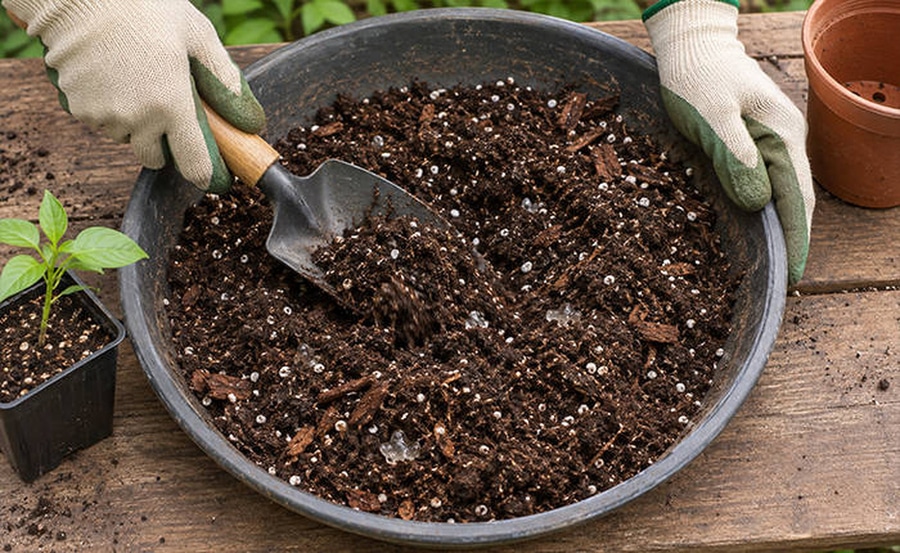
Mixing hydrogel into pots, beds or planting holes means spreading the granules evenly through the root zone. Use the rate on the product label.
New pots and hanging baskets
Blend the hydrogel through the potting mix before planting, rather than adding it as a layer. Check whether the label calls for dry mixing or for hydrating the granules first. Hydrated gel can be easier to manage in hanging baskets. Dry granules may swell and lift the mix after the first watering. Leave space below the rim, water thoroughly, and confirm that water drains out.
Two mistakes are common. The first is a scoop of dry crystals at the bottom of the pot. After watering, the crystals swell into a soggy layer above the drainage holes, where few roots grow. The second is a layer on top, where sun and air dry it out and gel can wash onto the surface.
Garden beds and planting holes
In beds, work the granules into the upper soil where most roots will grow, then water them in. For shrubs and trees, mix hydrogel into the backfill around the root ball. Do not tip it into the bottom of the hole or leave it on the surface. For tree planting steps, see how to transplant a tree. For whole garden soil, compare ways to increase soil water retention.
Established plants
Avoid digging through roots just to add crystals. Wait until you repot, then refresh the mix. Nurseries and landscape crews can find more application context on our horticulture page.
Need a hydrogel plan for your pots, beds, or nursery stock?
A hydrogel plan for pots, beds, or nursery stock depends on details that change the answer. Pot size and exposure decide how fast the mix dries. Drainage and the growing medium decide whether extra storage helps or hurts. Your water source and feeding routine decide how much the gel can absorb.
Our technical team at SOCO® can review those details with you. We can suggest a grade, a particle size, and a small side-by-side trial before you treat every pot or bed. Send your plant species, container sizes or bed area, growing mix, climate, and irrigation method through our contact us page.
Conclusion
Hydrogel for plants is a useful tool when water drains away too fast, not when the mix stays wet. Start by finding out why your pots or beds dry out. Fix drainage and water-repellent mix first. Then choose a grade that suits your medium and water, and blend it evenly through the root zone. Trial a few pots before treating the rest. Our team at SOCO® can help you match a hydrogel to your plants and growing conditions. Contact us with your plant list, growing mix, and watering routine.
FAQ
Does hydrogel work in sandy soil?
Sandy soil is one of the better fits for hydrogel, because its large pores let water drain quickly. Mix the granules into the root zone and water thoroughly. If your irrigation water is salty, expect less swelling and try a few plants first.
How long does hydrogel last in the soil?
There is no single lifespan. Hydrogel slowly loses absorbency over time. Sunlight, fertilizer salts, hard water, and repeated wetting and drying all shorten its useful life. If the granules no longer swell after watering, the mix needs refreshing.
Can hydrogel be reused?
Reusing hydrogel from an old pot is not recommended. Old potting mix can carry built-up salts and broken-down organic matter. When you repot, start with fresh mix and fresh hydrogel.
Can I use hydrogel with fertilizer?
Yes, but fertilizer salts reduce how much water the gel absorbs. Feed at the rate your plants need rather than extra, and soak a few granules in your actual feed solution first. Learn more about hydrogel with fertilizer.
Is hydrogel suitable for vegetables?
Yes, when you choose a grade intended for growing plants and follow its label. We can share test reports for many SOCO® grades or arrange testing on request, so you can check the grade against your local requirements.
Will water crystals keep hanging baskets moist while I travel?
Water crystals can extend the time between waterings, but they will not replace watering. Before a trip, water deeply and move baskets out of wind and hot afternoon sun. Ask someone to check them while you are away.