#Industry News
Hydrogel in Agriculture: How It Holds Water, Where It Helps and Where It Does Not
A Deep Dive into Superabsorbent Polymers: Mechanisms, Real-World Benefits, and Practical Limitations for Modern Growers
Hydrogel in agriculture is a soil amendment that stores irrigation and rainwater in the root zone. In coarse soils, it can make that water last longer. Results depend on soil texture, water quality, and how evenly the field is irrigated. This guide explains how agricultural hydrogel works, which fields gain the most, and how to test it before wider use.
Where is irrigation water lost in the field, and where can hydrogel help?
Hydrogel in agriculture can help with only one of the ways irrigation water leaves a field. Water is lost through runoff, surface evaporation, drainage below the roots and uneven application. Hydrogel for agriculture addresses drainage, meaning water that passes through the root zone before the crop can use it.
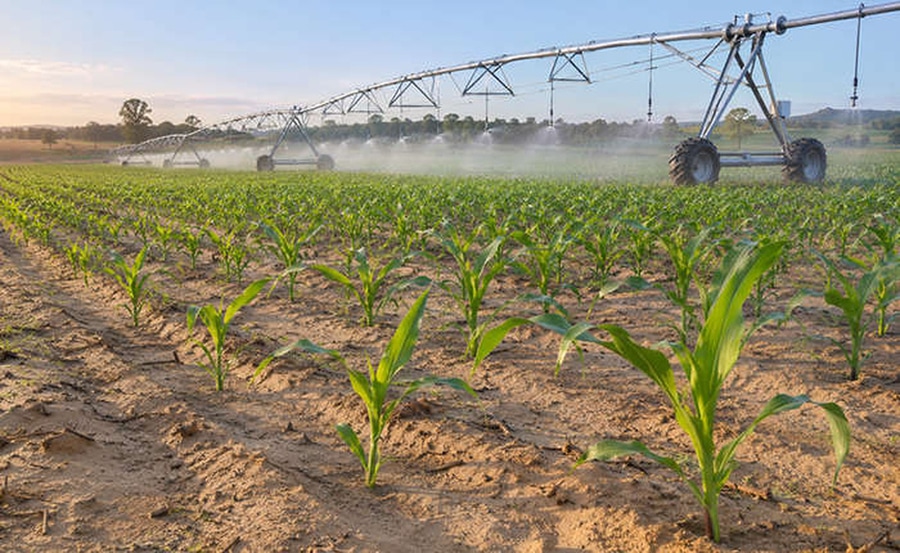
Sandy soils show this most clearly. Water moves down quickly, so roots get only a short window to take it up. Under a center pivot, sandy knolls and the outer spans may dry first while low spots stay wet.
Other losses need other fixes. Runoff points to slow infiltration or an application rate the soil cannot absorb. Evaporation responds to residue cover and irrigation timing. Dry strips under a sprinkler point to nozzle or pressure problems. Fix those first, then decide whether a soil amendment is worth trying. Our guide to fighting drought covers the wider set of options.
Learn More: Water Retaining Agents Enhance Efficient Water Utilization and Sustainable Agriculture
How does agricultural hydrogel hold and release water?
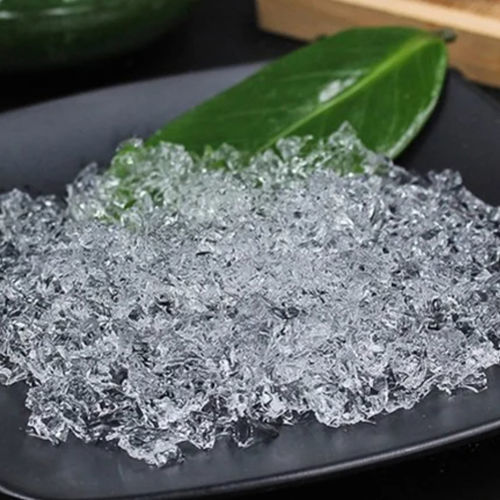
Agricultural hydrogel is a superabsorbent polymer for agriculture, often a crosslinked potassium polyacrylate. Dry granules absorb water into their network and swell into a soft gel. As the surrounding soil dries, roots draw water from the gel, and the granules shrink again.
Three variables decide how much water the gel holds in a field. Dissolved salts reduce swelling, and the calcium and magnesium in hard water have a strong effect. Soil pressure limits how far buried granules can expand. Fertilizer in the irrigation water lowers absorption further.
A jar of swollen gel in tap water tells you little about the gel under a crop. For the basics, read what is agricultural hydrogel. For the material itself, see potassium polyacrylate in the field.
What can you realistically expect from hydrogel in agriculture?
Realistic results from hydrogel in agriculture depend on soil texture, climate, and how water reaches the crop. In a suitable field, the root zone stays moist longer after each irrigation or rain. Crops can then ride out short dry spells with less stress. Hydrogel does not create water, and it does not replace irrigation.
Hydrogel therefore fits into water-saving agriculture as one tool among several, alongside scheduling, uniform application and residue cover. See how we approach water use efficiency on farms. The narrower question of spacing irrigations is covered in our guide on how to reduce irrigation frequency with soil hydrogel.
Fields where hydrogel tends to help
Sandy and loamy sand soils are the strongest candidates, along with shallow soils over rock or gravel. Fields irrigated in short, frequent sets also fit well. New plantings benefit while roots establish, and dryland plantings can gain when rain arrives in small, irregular amounts.
Fields where hydrogel adds little
Heavy clay already holds water and can stay wet, so extra storage rarely helps. The same applies to fields that drain slowly or flood. Salty or very hard irrigation water cuts absorption sharply. Where irrigation already meets crop demand evenly and cheaply, the gain may not justify the cost.
How do you use hydrogel with drip, sprinkler and furrow irrigation?
Using hydrogel with any irrigation system comes down to one rule. The granules must sit in soil that both water and roots reach.
Drip irrigation
Drip wets a narrow bulb or strip under each emitter, especially in sandy soil. Place hydrogel inside that wetted zone, along the row and at root depth. Of the common systems, drip makes accurate placement easiest.
Center pivots and sprinklers
Check water distribution first, because hydrogel cannot store water that never arrives. Then work the granules into the topsoil across the planting zone, at or before sowing. A common mistake is spreading granules on the surface and leaving them there. Surface granules dry in the sun, wash into low spots and never reach the roots.
Furrow and flood irrigation
Place hydrogel in the bed or row where roots grow, rather than in the furrow bottom where water stands.
Whatever the system, keep dry granules out of irrigation lines unless the product instructions allow it. Swollen gel can block filters and emitters. Review the fertilizer program too, since nutrient salts reduce absorption. Read more about hydrogel with fertilizer.
Need a hydrogel plan for your fields?
A hydrogel plan for field crops depends on crop and growth stage, soil texture, water quality and irrigation layout. Each factor changes the advice. Coarse soils make the strongest case. Salty water calls for a grade tested in similar water. The irrigation system decides placement and the equipment you will use.
Choosing a grade
Ask how absorption was measured and in what water, because results in pure water overstate field performance. Match particle size to the placement method. Finer grades often suit banding near the seed row, while coarser grades are easier to broadcast and work in. Test reports are available for many SOCO® grades, and we can arrange testing in your own water on request. See our technical documents and field crops applications.
Setting up a fair trial
Compare treated and untreated strips in the same field, with similar soil, crop stage and irrigation. Record water applied, rainfall, soil moisture at root depth and crop condition through the season. Repeat the comparison on different soil zones before treating whole fields.
Our technical team at SOCO® can review your field details and suggest a grade, placement and trial layout. Share your crop, soil, water source and irrigation system through our contact us page.
Conclusion
Agricultural hydrogel is worth trying where water drains through coarse soil faster than crops can use it. Hydrogel adds little in heavy clay, waterlogged ground or fields irrigated with very salty water. Fix uneven irrigation first, place the granules where water and roots meet, and test strips before treating whole fields. Our team at SOCO® can help you choose a grade and plan a trial. Contact us with your crop, soil and irrigation details.
FAQ
Can hydrogel be used with center pivots or sprinklers?
Yes. Hydrogel works under center pivots and sprinklers when it is incorporated into the topsoil across the planting zone. Check water distribution first, and do not leave granules on the surface.
Does hydrogel work in clay soil?
Hydrogel adds little in heavy clay, which already holds water and can stay wet. In clay loams that drain well, a small strip trial can show whether extra storage helps. Fix drainage problems before adding any amendment.
How does water quality change absorption?
Salty or hard irrigation water reduces how much water hydrogel absorbs, and calcium and magnesium have a strong effect. Test the grade in the water your crop will actually receive.
Can hydrogel be used with drip irrigation?
Yes. Place the granules in the wetted zone under the emitters, at root depth. Keep dry granules out of drip lines and filters.
Is hydrogel suitable for corn, cotton and wheat?
Yes, but placement differs. In corn and cotton, banding near the seed row at planting is common. In drilled wheat, working granules into the soil before seeding is more practical. Effects are often easiest to see during establishment, before roots grow below the treated layer.
Do I need a field trial first?
Yes. A strip trial in your own field is the most reliable way to judge results under your soil, water and irrigation. Measure water applied and root zone moisture rather than relying on jar tests.