#Research & Development
The Future of Water-Smart Farming: Fully Biodegradable Superabsorbent Polymers for Field Crops
How Biodegradable Water-Retention Agents Are Rewriting the Economics of Dryland Agriculture — One Acre at a Time
Introduction
Water scarcity is no longer an occasional headache for farmers — it is a structural constraint on global food production. Agriculture accounts for roughly 70% of freshwater withdrawals worldwide, and in many major grain-growing regions, unpredictable rainfall and prolonged drought have made every millimeter of soil moisture count. For field crops such as wheat, corn, soybean, cotton, and sorghum, the gap between rainfall and crop water demand often determines whether a season ends in profit or loss.
Traditional irrigation expansion is expensive, water rights are tightening, and pumping costs keep climbing. The smarter question is no longer "How do we bring more water to the crop?" but rather "How do we make every drop already in the soil stay there longer — and do it without leaving anything behind?"
Enter the new generation of fully biodegradable agricultural water-retention agents: soil conditioners engineered to absorb hundreds of times their own weight in water, release it slowly to plant roots, and then — critically — decompose completely into water, carbon dioxide, and biomass within a single growing season or shortly after. No microplastics. No soil residue. No compromise.
What Exactly Is a Biodegradable Water-Retention Agent?
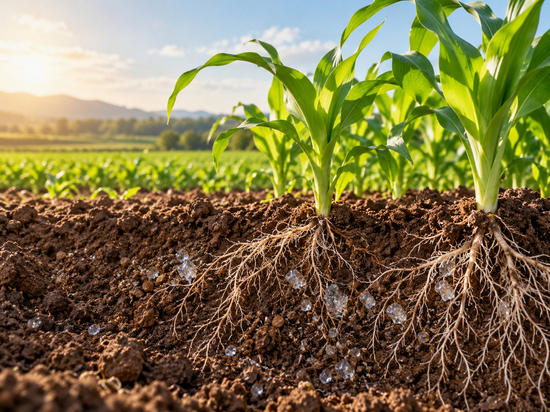
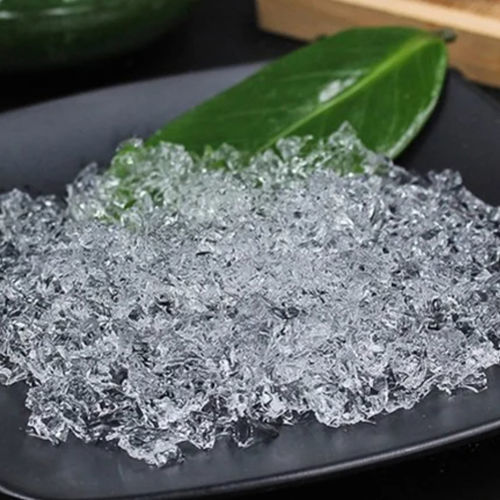
Water-retention agents — often called superabsorbent polymers (SAPs) or hydrogels — are materials with an extraordinary capacity to absorb and hold water. When mixed into the soil or applied at the seed zone, they act like microscopic reservoirs: swelling during rainfall or irrigation, then releasing moisture back to plant roots as the surrounding soil dries.
Older generations of these products were based on synthetic polyacrylates. They worked — but they worked at a cost. Synthetic SAPs persist in the soil for years, fragment into microplastics, and can degrade soil structure over repeated use. In an era where regenerative agriculture, soil health, and residue limits are moving to the center of procurement decisions, persistence has become a liability.
Fully biodegradable water-retention agents solve this. Built on natural-polysaccharide platforms — typically starch, cellulose, or chitosan-based chemistries — they deliver the same high absorption capacity while being designed from the molecule up to be consumed by soil microorganisms. Under normal field conditions, they break down completely within one crop cycle, leaving the soil exactly as they found it: intact.
Why Water Retention Matters for Field Crops
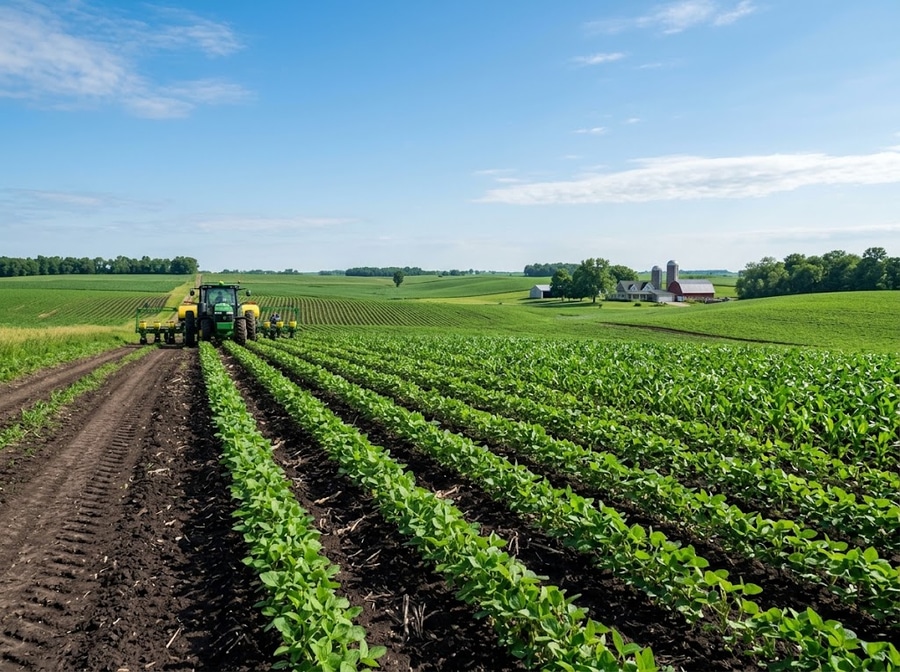
Field crops occupy vast acreages where drip irrigation is often impractical and where yield is highly sensitive to moisture stress during critical growth stages. The value proposition of a biodegradable water-retention agent concentrates around three effects:
1. Higher water-use efficiency. By holding rain and irrigation water in the root zone instead of allowing it to percolate below the root zone or evaporate, these agents effectively stretch every rainfall event further. Field results commonly show irrigation water savings in the range of 15–30%, depending on soil type and climate.
2. Buffering against moisture stress. The hours and days right after germination, and again during flowering and grain fill, are when water shortage hits yield hardest. Hydrogel reservoirs smooth out the moisture curve between rain events, protecting seedling establishment and reducing flower abortion and grain shrinkage.
3. Better seedling survival and uniform stands. Placing water-retention agent in the seed furrow keeps the micro-environment around the seed consistently moist. In direct-seeded cereals and in dry sowing conditions, this translates into faster, more uniform emergence — and uniform stands are the foundation of uniform yields.
On sandy and light-textured soils, where water drains almost as fast as it arrives, the effect is often the difference between a marginal field and a reliable one.
The Fully Biodegradable Difference
For a growing operation, "biodegradable" is not a marketing adjective — it is a purchasing criterion. Here is what it changes in practice:
- Certified complete degradation. Leading products now document ≥90% biodegradation within a defined period (typically 90–180 days) under standard test regimes such as OECD 301. The polymer returns to the soil carbon cycle; nothing accumulates.
- Zero microplastic load. Unlike conventional polyacrylate SAPs, biodegradable formulations fragment into natural compounds, not plastic particles. This matters for farms marketing to buyers with plastic-residue policies, and for anyone farming the same field decade after decade.
- Compatibility with regenerative programs. Because the agents decompose into CO₂, water, and microbial biomass, they fit within organic-input and soil-health-oriented production frameworks (subject to individual certification rules — always verify with your certifier).
- No legacy in rotation. Apply it this season for maize; next season's wheat inherits clean soil. There is no carryover effect, no buildup, no need to factor persistence into long-term soil management plans.
The practical takeaway: you get the agronomy without the residue. That is a trade most farm managers have been waiting for.
How to Use It: Practical Application Notes
Application is simple and integrates into existing field operations:
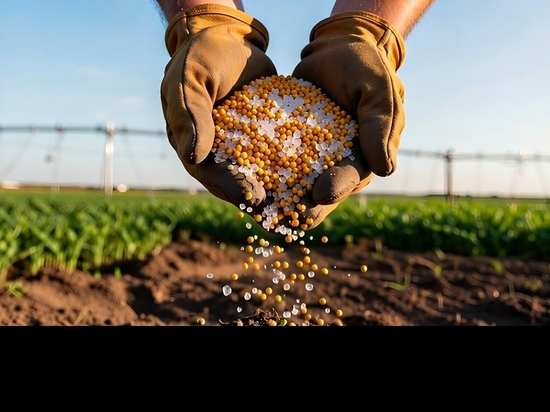
- Rate: Typical broadcast/incorporation rates run 15–45 kg per hectare depending on soil texture and aridity, with sandy soils at the higher end. Seed-zone placement allows reduced rates.
- Method: The agent can be broadcast and incorporated before sowing, placed in the seed furrow at planting with standard seeders, or blended into substrate for nursery raising before transplanting.
- Combination: It works alongside mulching, reduced tillage, and fertigation — absorbing and slowly releasing not just water but dissolved nutrients, which reduces leaching losses of nitrogen and potassium.
- Timing: Best applied at sowing so the polymer is charged by the first significant rainfall or pre-sowing irrigation.
One caution worth noting: water-retention agents are moisture managers, not moisture creators. In a fully rainfed desert scenario with no rainfall at all during the season, no polymer can help. The technology pays off where there is intermittent moisture to capture — which describes the majority of the world's dryland field-crop acreage.
The Economics: A Straightforward Payback Logic
The business case rests on three lines of the field budget:
1. Reduced irrigation cost — fewer irrigation events per season, lower pumping and labor costs.
2. Protected yield — moisture stress during flowering is the single most expensive event in cereals; buffering it protects revenue, not just costs.
3. Replant avoidance — improved emergence and stand uniformity reduce the incidence — and the cost — of patchy stands and reseeding.
Applied to a broadacre operation, even a modest yield protection of 5–8% during a dry spell typically covers the input cost many times over. And unlike irrigation infrastructure, the investment is field-by-field and season-by-season — fully scalable to your risk profile.
Conclusion: Water Intelligence, Without Footprints
Dryland farming is not going away — it is expanding. The farms that thrive in the next decades will be the ones that squeeze the most value from every drop of water that falls, while keeping their soil productive for the next generation of growers.
Fully biodegradable water-retention agents represent exactly this kind of intelligence: a targeted, season-bound input that raises water-use efficiency, shields yields from moisture stress, and then quietly disappears — leaving nothing behind but a healthier root zone and a better harvest.
For farm managers evaluating their moisture strategy this season, the question is simple: if you could store rainfall in the root zone and leave no trace, why wouldn't you?