#Crops
Why more and more strawberry growers are moving away from traditional bags
In intensive strawberry cultivation, there are decisions that make a difference season after season.
For years, substrate bags have been the standard in many farms. They work. They are well known. But they also have structural limitations that directly impact costs, root health, and the sustainability of the system.
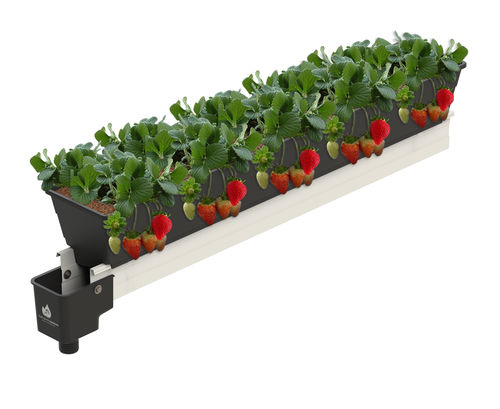
Today, an alternative such as HS Evolution Pot, developed by Hydroponic Systems, is redefining the way strawberries are grown in bulk substrate under greenhouses and tunnels.
Real control of drainage and root health
One of the main critical points in bag cultivation is drainage management. When there is no structured collection system, drained water becomes a risk factor: accumulation, recontamination, and increased pressure from root pathogens.
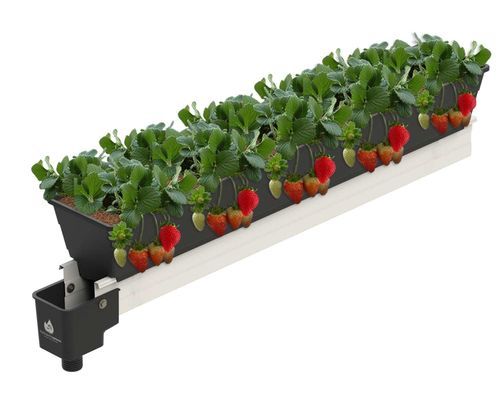
The HS Evolution Pot system integrates an individual pot (Spacer Pot) and an elevated metal gutter that collects drainage in an orderly manner. This allows:
- Recovery of the drained nutrient solution.
- Disinfection if desired.
- Reuse with health guarantees.
The result is a more controlled root environment and more efficient fertigation. In high-density crops, where every mistake is multiplied by thousands of plants, this difference is strategic.
Bulk substrate: real production flexibility
Unlike the traditional model based on prefabricated bags, HS Evolution Pot works with bulk substrate introduced directly into the pot.
This offers three clear advantages:
- Customization of the substrate volume per plant, adapting it to the varietal strategy or cycle.
- Greater freedom in planting density, without depending on closed formats.
- Better distribution of plants in the crop line, optimizing space and uniformity.
In professional farms, where every linear meter must be justified in terms of yield, this flexibility allows the production system to be adjusted with greater technical precision.
Drastic reduction in plastic per hectare
One of the strongest arguments for the system is its impact on sustainability. By eliminating the use of plastic bags, approximately 1.5 tons of disposable plastic per hectare are avoided in each cycle.
This data not only has environmental implications. It also directly affects the cost structure:
- Lower expenditure on plastic purchases.
- Reduction in waste removal and management costs.
- Better positioning with customers and chains that demand stricter environmental standards.
Sustainability is no longer just a matter of reputation; it is a competitive factor.
Elevated format: ergonomics and professionalization of cultivation
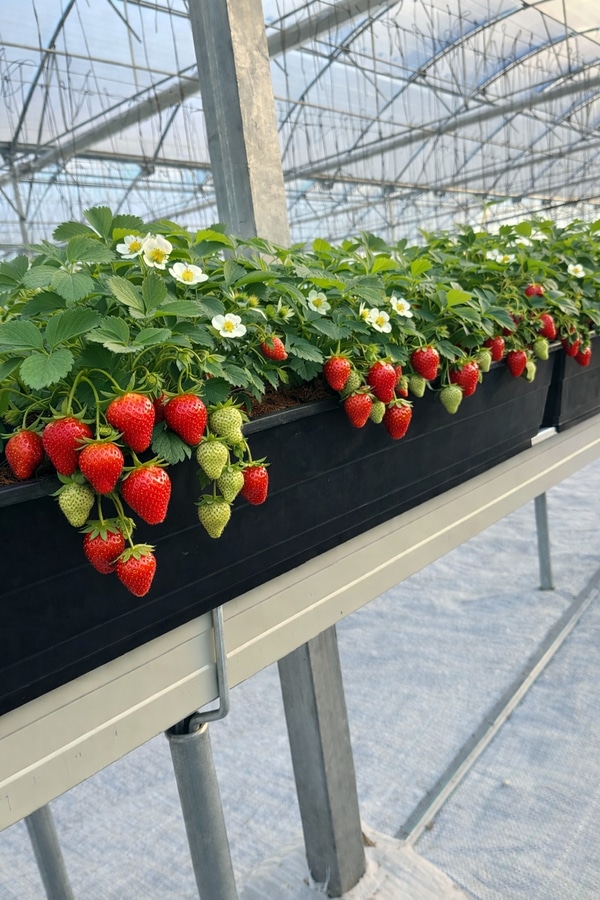
HS Evolution Pot is marketed in an elevated format on fixed posts, for both greenhouses and tunnels. This design:
- Improves work ergonomics.
- Promotes ventilation and the health of the crop.
- Offers a more professional and orderly image of the farm.
In production for export or demanding markets, the professionalization of the production system is an added value.
A strategic decision for large producers
HS Evolution Pot is not simply a variation on substrate cultivation. It is a structural evolution of the system, designed for producers who work on a large scale and need:
- Greater control.
- Greater resource efficiency.
- Waste reduction.
- Technical adaptability.
In a context where margins depend on details—root health, water management, structural costs, and sustainability—opting for a more advanced system is no longer a technological choice but a business decision.
Strawberry cultivation is evolving. And those who anticipate this change are the ones who consolidate their competitiveness in the long term.
Translated with DeepL.com (free version)