#Farm Machinery & Equipment
Do sticky traps warp in humid environments?
Design and Materials that Guarantee Stability
In greenhouses, tunnels, and intensive crops, high humidity is a constant. And yet, one of the most frequent problems reported by farmers is always the same: sticky traps that bend, ripple, or lose their stickiness just a few days after installation. The result is clear: inaccurate readings, reduced capture capacity, and a false sense of pest control.
COMMON PROBLEMS:
Producers working with Integrated Pest Management (IPM) programs face several problems when traps are not designed for humid environments:
1. Deformation due to condensation, preventing proper visual exposure.
2. Loss of adhesive due to migration or dilution with humidity.
3. Rolls that stick together when unrolled.
4. Unreliable readings, affecting key IPM decisions.
5. Constant replacements, increasing labor costs and working time.
When a trap fails, not only is material lost, but critical pest control information is also lost.
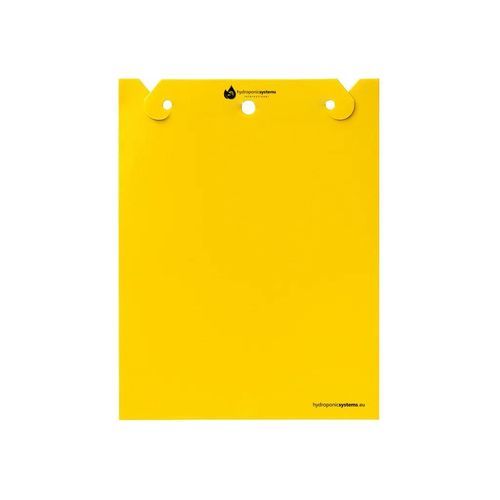
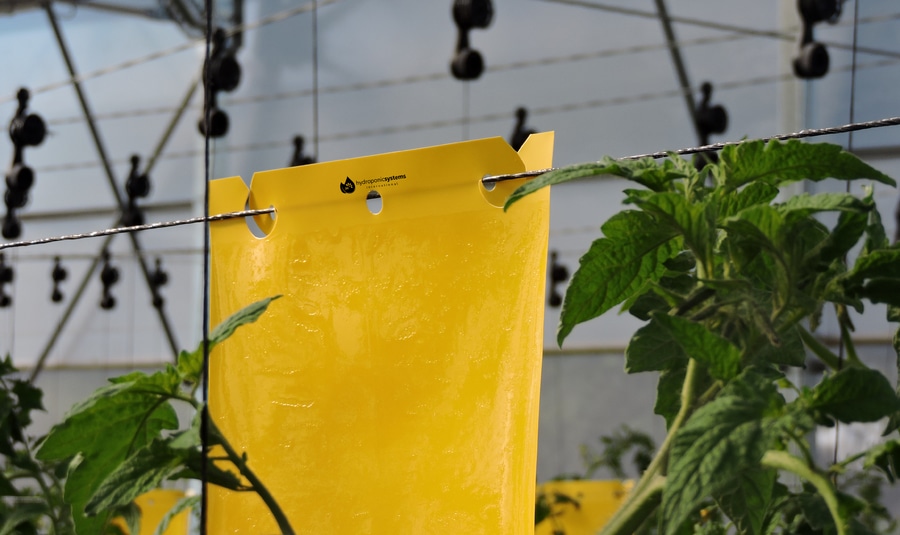
The solution lies in the design and materials. Not all sticky traps are created equal. Hydroponic Systems' pest control boards are specifically designed to work in demanding conditions of humidity, heat, and solar radiation.
The key technical features that make the difference:
1. High-dimensional stability engineering plastic, which prevents warping even in saturated environments.
2. Moisture-resistant treatment of the backing, which maintains rigidity throughout the entire cycle.
3. Adhesive formulated for humid climates, with high capture capacity and no runoff.
4. Stable and homogeneous color that does not degrade or lose its attractiveness.
5. Adhesive rolls with controlled spacing, easy to install without deformation or sticking together.
These characteristics guarantee physical stability, consistent adhesiveness, and reliable data, even in greenhouses with high condensation or misting systems.
DIRECT BENEFITS
Installing traps designed to last means:
1. Fewer trap changes.
2. Fewer monitoring errors.
3. Greater effectiveness in IPM programs.
4. Better integration with biological control.
5. Real savings in time and operating costs.
When the trap maintains its shape and adhesive, the farmer maintains CONTROL.
Want to see for yourself?
Request the materials data sheet now and verify the durability of Hydroponic Systems traps: discover why more and more farmers are relying on solutions designed for real-world growing conditions, not laboratory tests.
A trap that doesn't deform is a decision made in time.