#Crops
Soil pH Management
Understanding how soil pH influences nutrient availability and crop development
Soil pH is one of the most important factors affecting crop performance. It determines nutrient availability, influences biological activity within the soil, and directly impacts plant growth, productivity, and crop quality.
Maintaining an appropriate pH allows roots to absorb nutrients efficiently and supports healthy plant development throughout the growing season.
What is Soil pH?
Soil pH measures the degree of acidity or alkalinity of the soil. Its value directly affects nutrient solubility and the ability of plants to absorb essential elements.
Every crop species has an optimal pH range where it achieves its best growth and productivity.
Why Soil pH Matters
When soil pH remains within the appropriate range, nutrients stay available to plant roots and soil microorganisms remain highly active.
An unsuitable pH can reduce nutrient availability, limit plant growth, and decrease crop yields.
Relationship Between Soil pH and Nutrient Availability
Nutrient availability depends heavily on soil pH.
Highly acidic soils may reduce the availability of phosphorus, calcium, and magnesium while increasing aluminium toxicity.
In alkaline soils, micronutrients such as iron, manganese, and zinc become less available, often leading to chlorosis and nutritional deficiencies.
Measuring Soil pH
Regular pH monitoring helps identify imbalances before they affect crop performance.
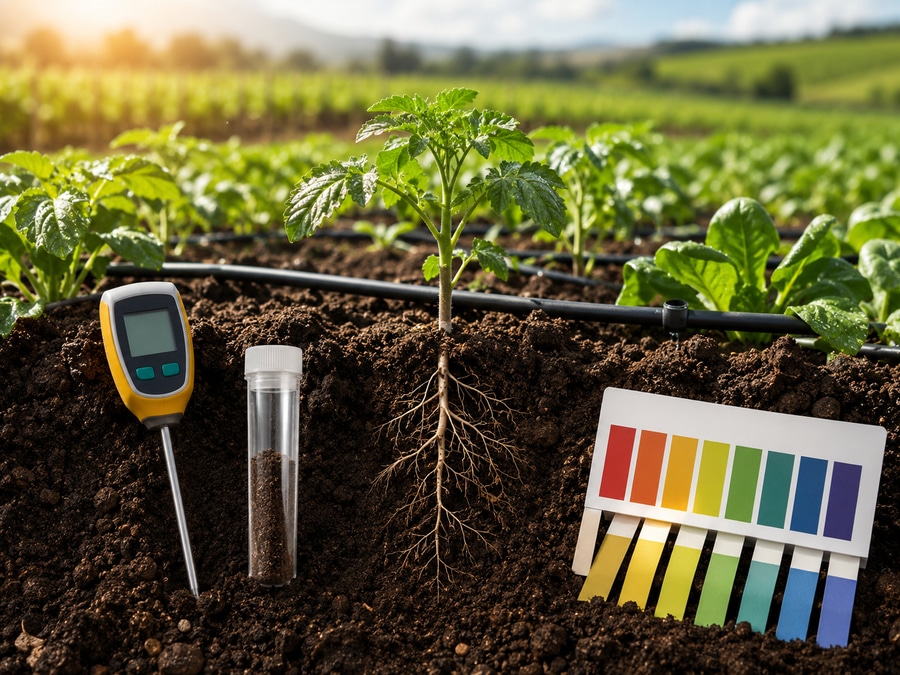
Common measurement methods include:
Chemical pH test kits.
Digital pH meters.
Laboratory soil analysis.
Laboratory analysis provides the most complete assessment by evaluating pH together with soil texture, fertility, and nutrient content.
Factors Affecting Soil pH
Several natural and management-related factors influence soil pH.
Soil Type
Soil texture and composition determine its buffering capacity. Sandy soils generally acidify more easily, while clay soils maintain more stable pH levels.
Climate
Rainfall, temperature, and leaching gradually alter soil chemistry. Regions with high rainfall commonly develop more acidic soils.
Biological Activity
Soil microorganisms are responsible for decomposing organic matter and transforming nutrients. Their activity depends largely on soil pH, moisture, and temperature.
Correcting Soil pH
Correction methods depend on both soil characteristics and the degree of acidity or alkalinity.
Acidic Soils
Agricultural lime is commonly used to increase soil pH and improve nutrient availability. Organic matter also helps stabilise soil chemical properties.
Alkaline Soils
Elemental sulphur and other acidifying amendments can gradually reduce soil pH. Specific fertilisers may also improve the availability of essential micronutrients.
Irrigation Water and Soil pH
Irrigation water quality also influences soil chemistry.
Water containing high concentrations of dissolved salts can increase soil alkalinity, while more acidic water may gradually lower soil pH.
For this reason, both irrigation water and soil should be analysed regularly.
Technology for Soil pH Management
Modern agriculture increasingly relies on technology to monitor and manage soil pH accurately.
Common tools include:
Real-time monitoring sensors.
Digital pH measuring equipment.
Automated irrigation management systems.
These technologies improve decision-making and increase crop management efficiency.
Best Practices for Maintaining Soil pH
Good soil management helps maintain favourable conditions throughout the growing season.
Recommended practices include:
Performing regular soil analyses.
Applying fertilisers according to crop requirements.
Incorporating organic matter regularly.
Implementing crop rotation.
Adjusting soil amendments based on soil type and crop needs.
Recommended Soil pH for Common Crops
Crop Recommended pH
Tomato 6.0–6.8
Potato 4.8–6.5
Maize 5.5–7.0
Wheat 6.0–7.0
Strawberry 5.0–6.5
Soybean 6.0–7.0
Alfalfa 6.5–7.5
Conclusion
Soil pH plays a fundamental role in nutrient availability, microbial activity, and overall crop performance. Regular monitoring and appropriate management help maintain fertile soils, improve nutrient uptake, and support more productive and sustainable agricultural systems.