#Crops
Irrigation for Fruit Trees: The Complete Guide to Efficient Water Management
What Is the Best Irrigation System for Fruit Trees?
At Gestiriego, we design, install, and optimize irrigation systems for fruit trees with one clear objective: higher yields using less water and fewer resources.
This guide explains the best irrigation system for fruit trees, how to install a drip irrigation system, how much water fruit trees need, irrigation frequency according to climate and soil conditions, and the key practices for maintaining healthy, productive orchards.
What Is the Best Irrigation System for Fruit Trees?
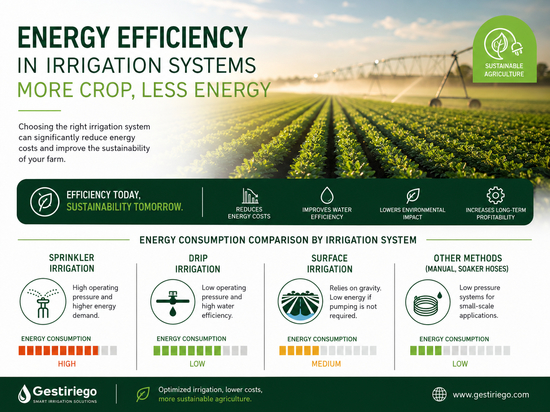
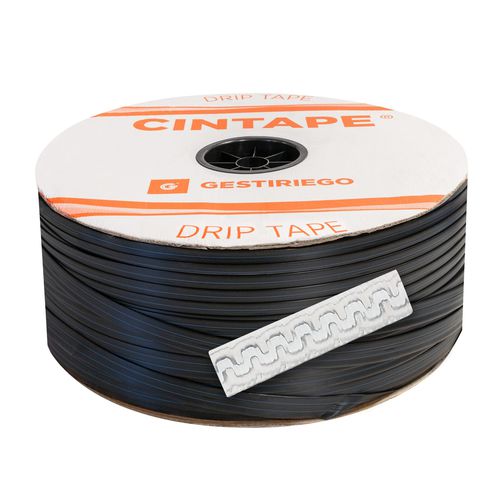
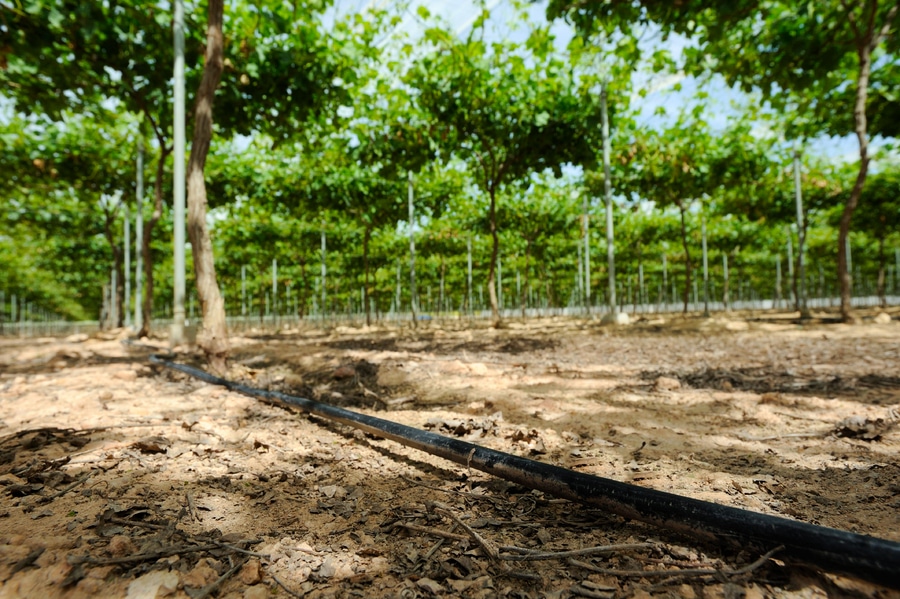
In most cases, drip irrigation is the most efficient irrigation system for fruit trees.
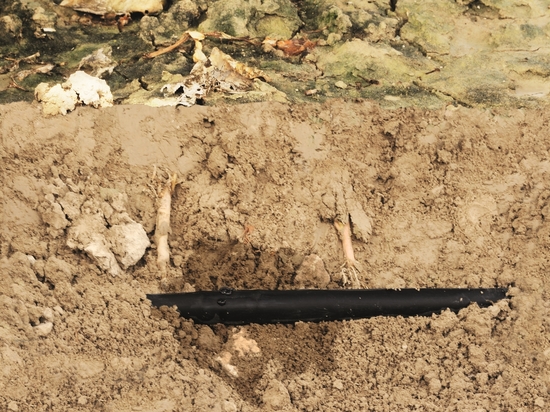
It delivers water directly to the active root zone at a low flow rate, minimizing losses through evaporation and runoff while allowing precise fertigation and preventing waterlogging.
In windy climates or sandy soils, micro-sprinklers help expand the wetted area and provide better protection during flowering.
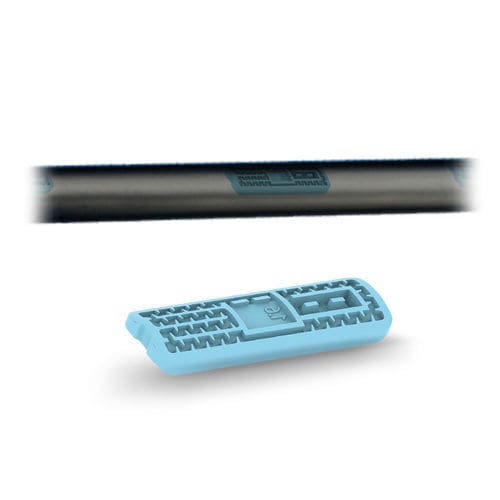
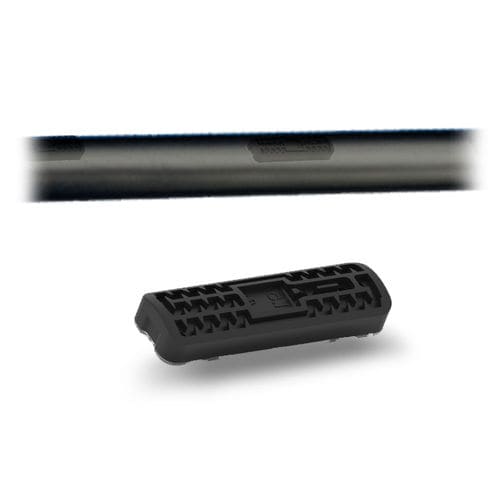
In high-density orchards or sloping terrain, pressure-compensating emitters ensure uniform water distribution throughout the system.
Benefits of Drip Irrigation for Fruit Trees
High water and energy efficiency.
Stable wetting pattern around the active root zone.
Compatible with fertigation for precise nutrient application.
Reduced disease pressure by keeping trunks and foliage dry.
Easy automation through timers, volumetric controllers, or soil moisture sensors.
Where Should You Irrigate? Understanding the Active Root Zone
One of the most common mistakes is irrigating directly at the trunk.
The active absorbing roots are located at the tips of the root system beneath the tree canopy, commonly known as the drip line.
For optimum irrigation performance:
Avoid wetting the trunk or piling organic matter around its base, as this encourages collar diseases.
Position emitters in a ring around the canopy projection, away from the trunk.
As the tree grows, gradually move the emitters outward to follow root development.
Sizing a Drip Irrigation System for Fruit Trees
Flow Rates and Number of Emitters
Young trees (1–3 years): One 4 L/h emitter or two 2 L/h emitters.
Mature trees: Three 4 L/h emitters per tree provide a suitable starting point.
Larger canopies or sandy soils may require additional emitters to enlarge the wetted area.
Pressure-compensating emitters are recommended for sloping land and long irrigation lines.
Quick Water Calculation
Water applied = Flow rate (L/h) × Irrigation time × Number of emitters
Wetting Depth
Aim to moisten the upper 40–60 cm of soil, where most fine absorbing roots are concentrated.
If moisture remains only near the surface, increase irrigation duration or divide the irrigation cycle into two shorter applications to improve infiltration without causing waterlogging.
Essential Irrigation Components
A complete irrigation system should include:
Appropriate filtration (screen, disc, or sand filters depending on water quality).
Pressure regulator and pressure gauges.
Control valves for independent irrigation zones.
Irrigation controller or soil moisture sensor.
Polyethylene mainlines and laterals with integrated or punched-in emitters.
Air-release valves and flushing points.
Fruit Tree Irrigation Frequency
Irrigation frequency depends on climate, soil type, crop growth stage, and planting density.
Hot, Dry Regions
During fruit enlargement:
Short daily irrigations are generally recommended.
During heat waves, divide irrigation into morning and afternoon cycles to improve infiltration and reduce evaporation.
Early morning and late afternoon are the preferred irrigation times.
Temperate or Humid Regions
Under cooler conditions, irrigating every other day may provide sufficient moisture, depending on rainfall and wind conditions.
Golden Rule
Maintain a consistently moist root zone without allowing soil to crack or become saturated.
Mild water deficits can often be corrected, whereas prolonged waterlogging may lead to root suffocation and long-term damage.
How Much Water Do Fruit Trees Need?
As a practical reference:
Young Trees
Spring: 3–6 L/day
Summer: 6–12 L/day
Mature Trees
Spring: 15–25 L/day
Summer: 25–40 L/day
Water demand may temporarily double during periods of extreme heat.
Adjust irrigation according to:
Soil texture (sandy soils require more frequent irrigation; clay soils require longer but less frequent irrigations).
Tree canopy size.
Growth stage, particularly flowering and fruit enlargement.
How to Install Drip Irrigation for Fruit Trees
Analyze irrigation water quality, including suspended solids, iron, and carbonate levels.
Calculate total system flow requirements and verify available pressure.
Divide the orchard into irrigation zones according to variety, age, or exposure.
Install the control head, including filtration, pressure regulation, fertigation equipment, pressure gauges, and irrigation controller.
Install the polyethylene mainline and laterals, placing three 4 L/h emitters around each mature tree in a circular pattern away from the trunk.
Test pressure and flow at the most critical points of the irrigation network.
Program short, frequent irrigation cycles and verify that moisture reaches 40–60 cm below the surface.
Establish a maintenance schedule including filter cleaning, flushing, and seasonal emitter inspections.
Fertigation and Plant Nutrition
Apply nutrients within the wetted root zone, never directly against the trunk.
During productive periods, fertigation is commonly applied every other irrigation cycle, adjusting according to soil and leaf analyses.
Liquid organic fertilizers may be applied according to agronomic recommendations.
High-potassium fertilizers are particularly beneficial during fruit coloring to improve sugar content and uniform ripening.
Always follow fertilizer compatibility recommendations.
Common Irrigation Mistakes
Wetting the trunk or fertilizing around its base.
Allowing the wetting pattern to dry completely between irrigations.
Over-irrigation leading to root suffocation.
Poor filtration causing emitter clogging.
Failing to move emitters outward as the canopy expands.
When Should Fruit Trees Be Planted?
Deciduous fruit trees (almond, apple, pear, peach): during winter dormancy.
Citrus and frost-sensitive species: in spring after the risk of frost has passed.
Avoid planting in waterlogged soils, prepare the planting hole properly, and begin irrigating the active root zone immediately after planting.
Annual Maintenance of Drip-Irrigated Fruit Trees
Winter
Inspect pipes, valves, and fittings.
Clean filters.
Spring
Start irrigation with short cycles.
Monitor bud break and fruit set.
Summer
Divide irrigation during heat waves.
Control weeds around the wetted area.
Autumn
Gradually reduce irrigation.
Promote fruit maturation and reserve accumulation through balanced nutrition.
Conclusion
A properly designed and managed drip irrigation system enables fruit trees to make better use of every liter of water, improving productivity while reducing disease risk.
Maintaining a stable wetted root zone, ensuring uniform water distribution, and adapting irrigation schedules to crop development are essential for achieving long-term orchard performance and efficient water management.