#Research & Development
Energy Consumption Comparison Between Different Irrigation Systems
Optimizing Energy Use in Agriculture
Modern agriculture faces a fundamental challenge: producing more while using fewer resources. Water and energy are two key factors in achieving agricultural sustainability. In this context, energy efficiency in irrigation systems has become a critical issue for farmers and water management professionals.
At Gestiriego, we take an in-depth look at the different irrigation methods and their energy consumption. Choosing the right irrigation system can make a significant difference in operating costs and long-term sustainability.
1. Introduction: The Importance of Energy Efficiency in Irrigation
Irrigation accounts for approximately 15% of total energy consumption in agriculture. However, studies show that up to 40% of this energy is wasted due to inefficient practices, improper equipment sizing, and poor maintenance.
The energy consumption of irrigation systems varies considerably depending on factors such as:
The irrigation technology used.
The water source (surface or groundwater).
Operating pressure.
Pipeline layout and design.
Optimizing energy consumption not only reduces operating costs but also minimizes environmental impact and improves the sustainability of agricultural operations.
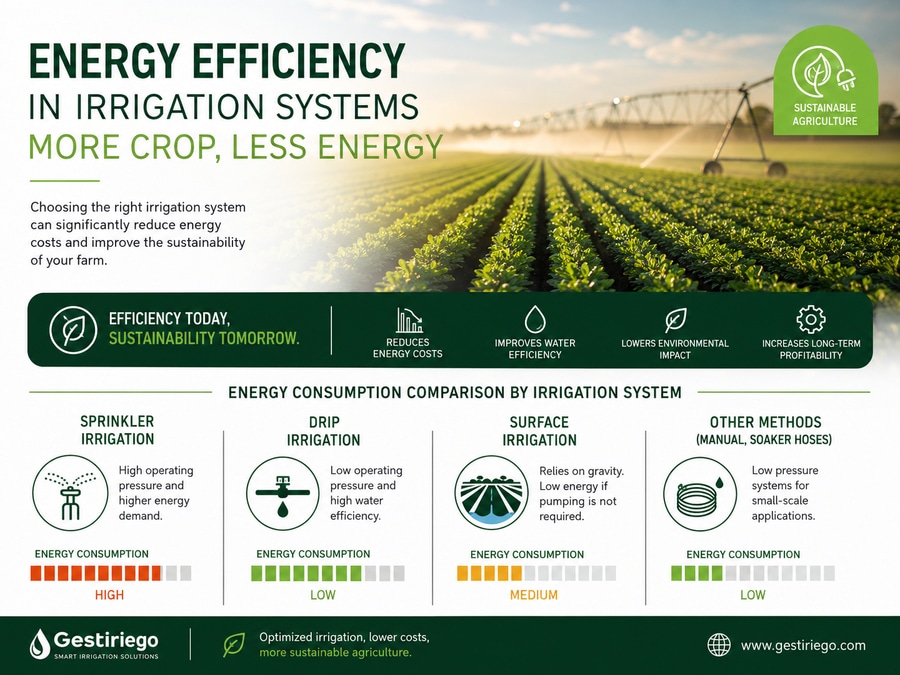
2. Energy Consumption Comparison by Irrigation System Type
Below is an overview of the most commonly used irrigation systems and their energy performance.
2.1 Sprinkler Irrigation Systems
Sprinkler irrigation distributes water as fine droplets, simulating natural rainfall. These systems are widely used in large-scale crop production.
Central Pivot
Typical operating pressure: 10–60 psi
Energy consumption: 45–10,792 kWh/ha per year, depending on operating pressure and groundwater depth.
Efficiency: Excellent field coverage, although energy consumption increases at higher operating pressures.
Fixed or Semi-Fixed Sprinklers
Typical operating pressure: 30–60 psi
Energy consumption: Varies according to system design.
Efficiency: Suitable for high-value crops but may require significant energy if continuous pumping is necessary.
Traveling Gun Irrigation
Typical operating pressure: Variable.
Energy consumption: 131–2,233 kWh/ha per year.
Efficiency: Requires higher operating pressure and therefore higher energy consumption than fixed sprinkler systems.
Key takeaway: Sprinkler irrigation is highly versatile but can become energy-intensive when operating at high pressures or when equipment movement is required. Proper pressure optimization is essential for reducing energy costs.
2.2 Micro-Irrigation Systems
Micro-irrigation includes drip irrigation and micro-sprinklers, both recognized for their low energy requirements and high water-use efficiency.
Drip Irrigation
Typical operating pressure: 8–20 psi
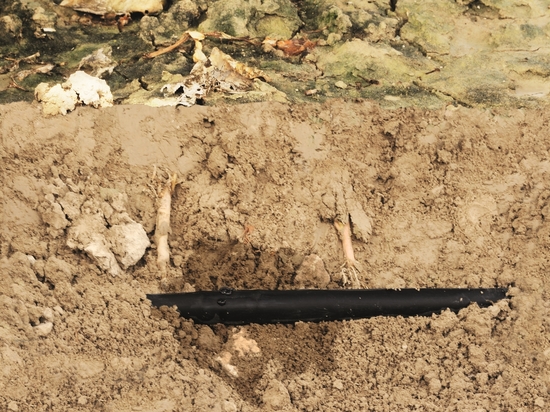
Energy consumption: Approximately 617.5 kWh/ha per year under efficient operating conditions.
Efficiency: Excellent water-use efficiency with considerably lower energy consumption than sprinkler irrigation.
Micro-Sprinklers
Typical operating pressure: Variable.
Energy consumption: Lower than conventional sprinkler systems.
Efficiency: Provides improved water distribution in certain soil conditions and orchard crops.
Key takeaway: Drip irrigation remains the most energy-efficient irrigation method, operating at significantly lower pressures while maximizing water efficiency.
2.3 Surface Irrigation Systems
Surface irrigation relies on gravity to distribute water across the field.
Furrow Irrigation
Operating pressure: Not applicable (gravity-fed).
Energy consumption: 4,873–5,299 kWh/ha per year in certain studies.
Efficiency: Depends largely on land leveling and proper water management.
Basin Irrigation
Energy consumption: Variable.
Efficiency: Higher when supplied by surface water without pumping.
Key takeaway: Surface irrigation systems can be energy-efficient when pumping is not required, although their water-use efficiency is generally lower than pressurized irrigation systems.
2.4 Other Irrigation Methods
Manual Irrigation
Low direct energy consumption.
Limited scalability and lower operational efficiency.
Soaker Hoses
Typical operating pressure: 10–25 psi
Low energy consumption due to low operating pressure.
Key takeaway: These methods are suitable for small areas but are generally not practical for commercial-scale agriculture.
3. Key Factors Affecting Energy Consumption in Irrigation
Energy consumption depends not only on the irrigation system itself but also on several additional factors.
1. Pump Efficiency
Inefficient pumping systems can increase energy consumption by 25–40%.
Properly maintained pumps typically achieve efficiencies between 60% and 90%.
2. Operating Pressure
Higher-pressure systems require more energy.
Optimized hydraulic design can significantly reduce energy consumption without compromising irrigation performance.
3. Water Source
Groundwater pumping can account for up to 89% of total irrigation energy consumption.
Surface water generally requires less energy when pressurization is unnecessary.
4. System Design
Larger-diameter and shorter pipelines reduce friction losses and pumping requirements.
Efficient hydraulic design can lower energy consumption by 20–30%.
4. Strategies to Reduce Irrigation Energy Consumption
Energy efficiency can be improved through several practical strategies.
1. Convert to Low-Pressure Irrigation Systems
LEPA (Low Energy Precision Application) systems can reduce energy consumption by up to 40% in sprinkler irrigation.
Lower operating pressure while maintaining irrigation performance.
2. Optimize Drip Irrigation Design
Install low-pressure emitters.
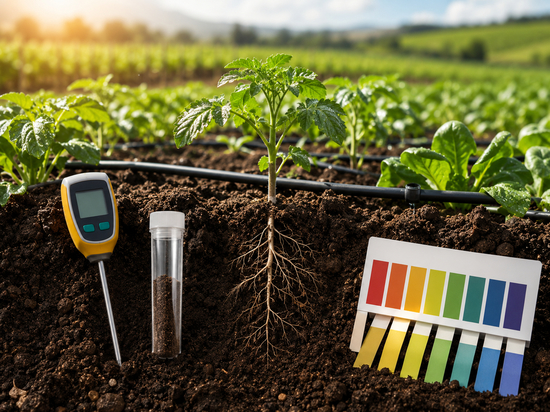
Use soil moisture sensors to avoid unnecessary irrigation cycles.
3. Implement Smart Irrigation Technologies
Rain and soil moisture sensors help prevent unnecessary irrigation.
Weather-based irrigation controllers improve scheduling accuracy and overall efficiency.
4. Integrate Renewable Energy Sources
Solar-powered pumping systems offer a sustainable alternative that reduces dependence on conventional energy sources.
Conclusion: Which Irrigation System Is the Most Energy-Efficient?
Drip irrigation continues to be the most energy-efficient irrigation method, combining low energy consumption with outstanding water-use efficiency. However, selecting the most appropriate system depends on crop requirements, water availability, field conditions, and overall project objectives.
At Gestiriego, we develop innovative and efficient irrigation solutions that help farmers reduce operating costs, improve water management, and enhance the sustainability of their agricultural operations.
Would you like to optimize the energy consumption of your irrigation system? Contact Gestiriego for expert advice and customized irrigation solutions.