#Farm Machinery & Equipment
“I couldn’t afford to lose another harvest”
How a farmer protected his crop from frost
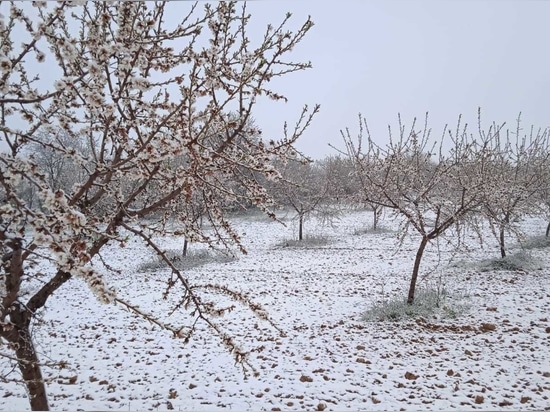
Late frosts remain one of the main threats to high-value crops in Europe. In regions producing stone fruit and nuts, where profitability depends directly on each harvest, a
single night of sub-zero temperatures can cause losses that are difficult to bear.
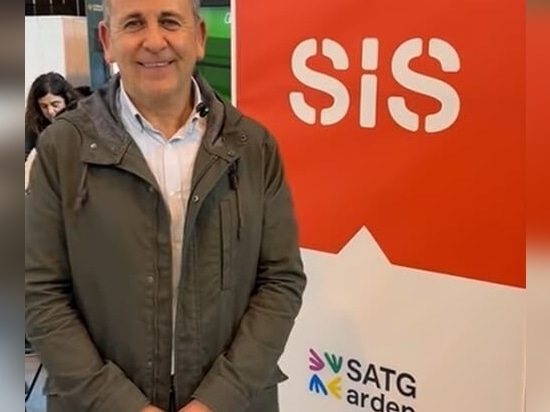
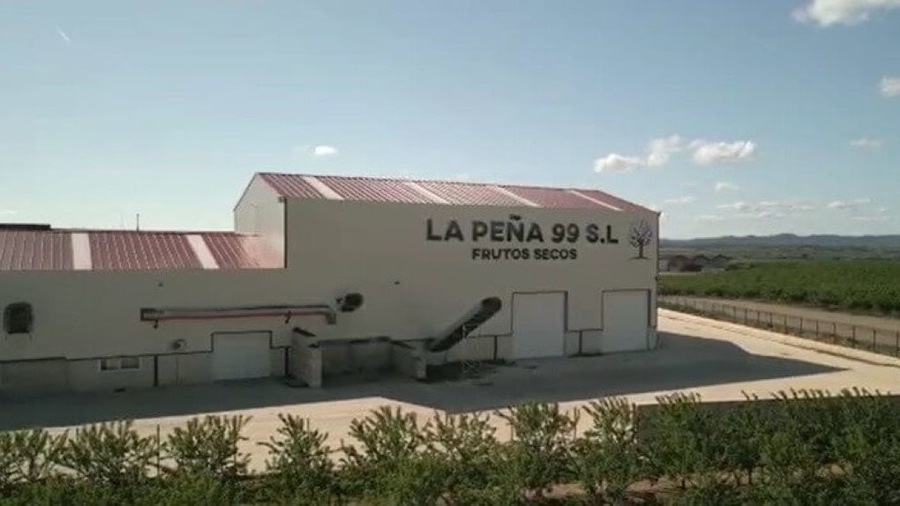
This was the situation faced by Miguel Salafranca, a farmer and owner of the company Peña 99 SL in Huesca, which specialises in almond and walnut production.
“There were areas where frost was a constant problem”
“We are a family-run business with 350 hectares of almond trees and 30 hectares of walnut trees. We had areas within the farm where frost was a recurring problem,” explains Salafranca.
In his case, the risk was not a one-off occurrence. “We have had frost episodes in some parts of the farm practically every year. In 2022 alone, we suffered a total frost, the worst we have ever had,” he notes.
This irregular pattern of cold weather is due to the formation of microclimates within the farm itself, where cold air accumulates in certain areas, increasing the risk of damage to the crops.
From uncertainty to decision-making
To reduce this risk, the first step was to understand how the cold behaved within the vineyard. In this context, he began working with technology from The Climate Box, represented in Europe by the company SATGarden.
“They study the vineyard by zone and identify which areas are the coldest and which are the warmest. With that data, we can decide where to take action,” he explains.
This analysis allows for the precise identification of the most vulnerable areas and the optimisation of both planting strategy and investment in protection systems.
As Gabriel Usera, co-founder of The Climate Box, points out, “understanding microclimates allows for more efficient investment decisions and reduces the impact of frost on the plot”.
Anticipating with real-time information
In addition to the initial study, the system allows specific frosts to be anticipated 24 to 48 hours in advance.
“The farmer receives alerts on their mobile with the frost forecast and its severity, allowing them to act in good time,” explains Usera.
In practice, this translates into greater control and peace of mind for the producer. “We get a notification on our phone when temperatures drop and we can see the systems activating. We know we’re covered,” adds Salafranca.
Active protection: the role of the SIS system
Using the data from the microclimatic analysis, the next step was to implement active protection solutions in the coldest areas.
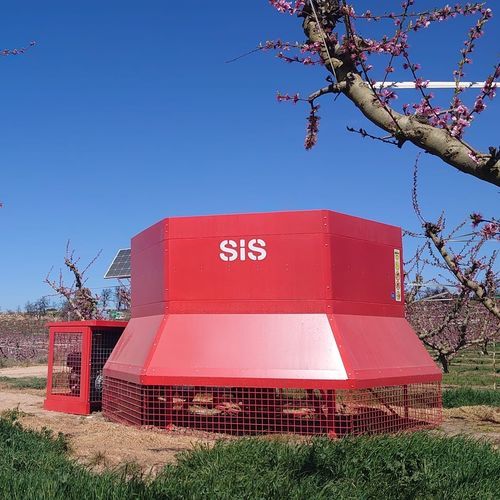
In this case, the farm has five units of the SIS (Selective Inverted Sink) system, a technology patented by SATGarden, which is also the company responsible for its installation across Europe.
The system operates on a key principle: during radiation frosts, cold air accumulates at ground level. The SIS towers extract this cold air and lift it upwards, preventing it from remaining in contact with the plants.
“They activate automatically when the temperature drops, and what they do is collect the cold from the ground and move it upwards so that the trees do not suffer,” explains the farmer.
Results: from recurring losses to guaranteed harvests
The results have been clear. According to Salafranca, the combined use of microclimatic analysis and active protection has significantly reduced the impact of frosts.
“Just by studying specific areas, we can already say that we have improved production by between 15% and 20%,” he explains.
But the most significant data comes in critical situations:
“In two years with frosts of between -2.5 and -3 °C, the system has saved 100% of our production.”
In economic terms, this can amount to very significant figures. “Across some 12 hectares, we’re talking about between 100,000 and 110,000 euros per year,” he adds.
A strategic decision for the future
Beyond the specific results, this case highlights a shift in approach to agricultural management: moving from reacting to problems to anticipating them.
“These days, if you want to remain efficient, you have to identify all the risks and take action to address them,” concludes the farmer.
Against a backdrop of increasing climate variability, the combination of forecasting tools such as The Climate Box and active protection systems such as SATGarden’s SIS is establishing itself as a key strategy for protecting high-value crops and ensuring the economic viability of farms.