#Industry News
Late frosts
How to protect high-value crops before it’s too late
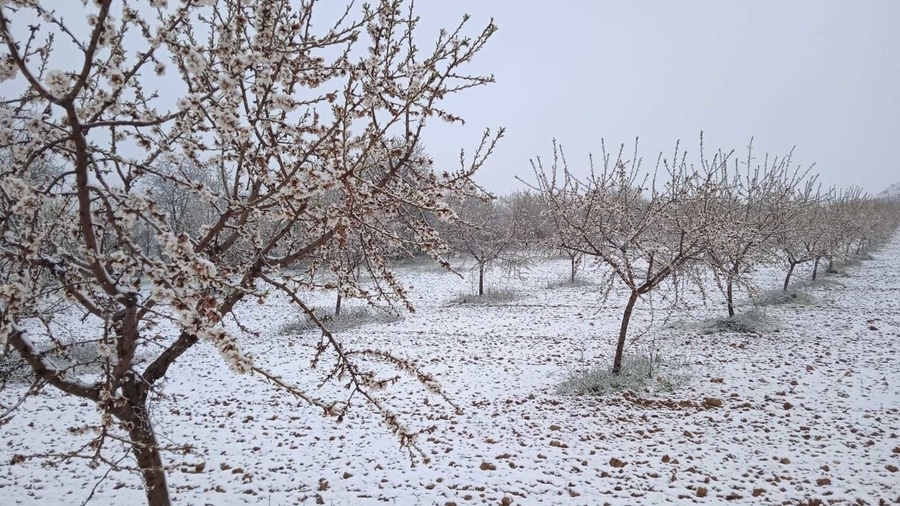
Among the major weather events that cause farmers the most concern are the dreaded late frosts, particularly for those involved in the production of high-value fruit crops. When temperatures drop below critical thresholds during the flowering stages or in the early stages of fruit development, the impact is immediate: damaged flowers, reduced fruit set or even total crop loss.
And as if that were not enough, in recent years, climate variability has increased uncertainty for farmers. Winters are becoming milder, sometimes bringing forward the budding of crops; this is an extremely adverse combination when it coincides with cold spells in spring, exposing plants to temperatures for which they are no longer physiologically prepared. For growers of cherries, almonds, walnuts, apples, peaches or berries, a single night of frost can jeopardise the entire season.
Microclimates within a single plot
One of the factors that most influences frost damage is the behaviour of cold air within the plot. During so-called radiation frosts, which occur on clear, calm nights, cold air—due to its greater density—tends to accumulate in the lower layers of the ground, particularly in low-lying areas or those with reduced air circulation.
This effect creates various microclimates within the same farm, where some areas may experience significantly lower temperatures than others. Understanding these variations is key to anticipating risk and implementing protective measures efficiently.
In this regard, technological solutions such as those developed by The Climate Box enable the analysis of a farm’s microclimates in advance and using historical data, through sensors, meteorological modelling and numerical simulations.
This technological tool, represented in Europe by the company SAT Garden, enables the generation of local frost forecasts and the assessment of how cold air behaves within a single plot. With this information, farmers can identify the most vulnerable areas and plan protection strategies before the weather event occurs.
From prediction to active crop protection
However, anticipating risk is only part of the strategy. When weather conditions indicate a possible frost, having systems capable of directly influencing the crop’s microclimate can make all the difference.
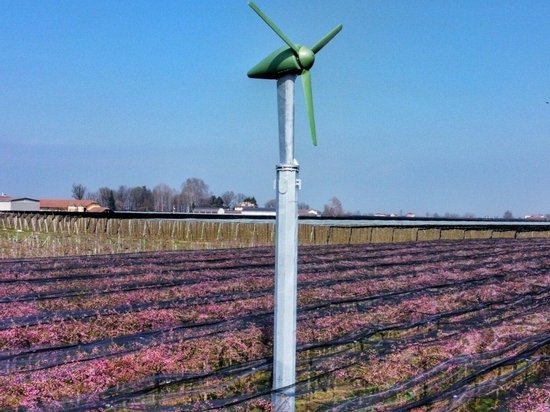
Among the technologies developed for this purpose, the SIS (Selective Inverted Sink) system stands out, a solution patented by SAT Garden for the active protection of crops against frost.
The operating principle is based on the natural behaviour of cold air. During the night, the denser, colder air accumulates near the ground, precisely where flowers and developing fruit are found. The SIS system works by selectively extracting this cold air and expelling it into the upper layers of the atmosphere, where it mixes with warmer air.
Using a high-capacity vertical ventilation system, the equipment propels the cold air upwards (to a height of approximately 80–100 metres), preventing it from accumulating in the crop area and promoting a more stable temperature around the plants.
Solutions tailored to each farm
The effectiveness of frost protection systems depends largely on a prior analysis of the farm. Factors such as topography, land orientation, planting density and the behaviour of cold air will determine the number and location of the fans required.
For this reason, projects usually begin with a technical study of the farm’s microclimate, combining climate analysis tools with agronomic field experience.
In Europe, SAT Garden is the company responsible for the installation and development of these systems, integrating both The Climate Box’s climate analysis technology and the company’s patented SIS® frost protection system.
This approach enables the design of solutions tailored to each farm, optimising crop protection and the use of resources.
Planning ahead to mitigate the impact of climate change
Although it is impossible to eliminate climate risk entirely, combining advanced forecasting tools with active protection solutions can significantly reduce the vulnerability of crops to frost events.
In an agricultural landscape increasingly shaped by climate variability, many farmers are opting for preventive strategies that enable them to protect their investment and ensure the continuity of production.
For high-value crops, where every hectare represents a significant cost in terms of establishment and management, but above all, time, anticipating frosts is becoming a key strategic decision for the economic sustainability of farms.