#Crops
Determining Soil Moisture
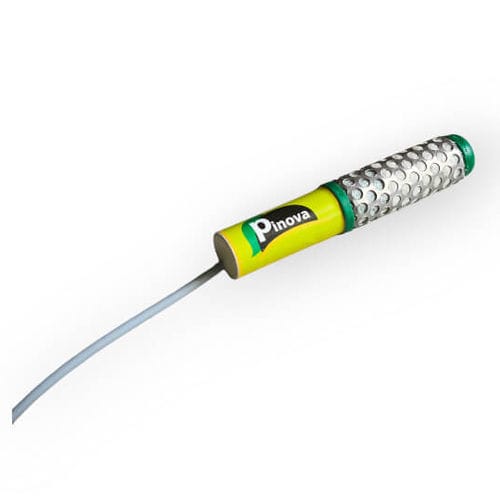
Pinova
Accurate soil moisture information is essential for creating precise irrigation schedules and amounts. Modern irrigation practices focus on applying only as much water as plants need for uninterrupted growth and development, without reducing yields. Several methods exist to determine soil moisture levels.
Methods of Determining Soil Moisture
Visual inspection
Gravimetric method
Mathematical calculation (water balance)
Sensor-based methods:
Measuring electrical conductivity (electrometric method)
Measuring soil water tension
Watermark sensor
Volumetric sensor
Measuring dielectric constant
Measuring thermal characteristics
Spectral reflection (remote sensing)
Radioactive radiation methods
The choice of method depends on the producer’s budget, the time available, the required precision, and practicality.
1. Visual Method
This method relies on visually inspecting the soil in the field. Because it is subjective and unreliable, it cannot be used to establish accurate irrigation schedules. At best, it can help determine the timing of soil cultivation or other agro-technical operations, but it is not recommended for irrigation management.
2. Gravimetric Method
Also known as the drying method, this is a direct way of determining soil moisture. A soil sample is weighed before and after drying at 105 °C until all water evaporates. The difference in weight represents the evaporated water, which is used to calculate soil moisture as a percentage by mass.
To express moisture as a volume percentage, the soil’s bulk density must also be known (determined in a laboratory). This method is precise and reliable, making it suitable for experimental work and for calibrating sensors. However, because it requires extensive sampling throughout the growing season, it is impractical for everyday irrigation management.
3. Mathematical Method (Water Balance Calculation)
This method calculates soil water deficit using daily evapotranspiration values. Dozens of formulas exist, but the Penman-Monteith formula is most widely used because it provides accurate results in both humid and arid climates.
Inputs required include:
Air temperature (average, min, max)
Air humidity (min, max)
Solar radiation
Wind speed
Precipitation
Crop coefficient (Kc)
Soil field capacity and available water
Irrigation records
Reference evapotranspiration (ETo) represents water loss from a well-watered grass surface. Since crops vary, crop coefficients (Kc) are used to adjust values for specific plants and growth stages. Crop evapotranspiration is calculated as:
ETc = ETo × Kc
Soil water deficit is then determined with the formula:
Dw = Dwpd + ETc − Pef − Irr
Where:
Dw = daily water deficit
Dwpd = previous day’s deficit
ETc = crop evapotranspiration (mm)
Pef = effective precipitation (mm)
Irr = irrigation (mm)
Although traditionally used only in research due to its complexity, this method has become more practical with the availability of affordable weather stations and computer or web-based applications.
Examples include irrigation in vineyards in Australia, Chile, and California. In California, the CIMIS project provides daily ETo data, which farmers use to plan irrigation. In viticulture, the Regulated Deficit Irrigation (RDI) method is applied, where only part of the ETc is replaced depending on the grapevine’s stage and the grower’s production goals.
4. Sensor-Based Methods
Sensor technologies are the most widely used today because they are quick, simple, and effective for real-time irrigation decisions.
4.1. Tensiometers
Tensiometers measure the suction force with which soil holds water. They act as an “artificial root,” showing when irrigation should start or stop. For example, the Irrometer uses a water-filled tube with a porous tip placed in the root zone. As soil dries, water is drawn from the tube, creating negative pressure that is displayed on the dial.
Advantages: low cost, easy installation, simple use.
Drawback: fragile construction, requiring careful handling.
4.2. Electrometric Methods
These measure soil moisture through electrical conductivity. Two main types:
Watermark sensors (gypsum-based):
In use since 1978
Can stay in the soil all season
Provide continuous, reliable readings unaffected by soil type, pH, or temperature
Values are given in centibars (cb):
0–10 cb: saturated soil
10–30 cb: adequate water
30–60 cb: irrigation usually needed
60–100 cb: irrigation needed in heavier soils
100–200 cb: soil too dry for optimal yields
Multiple sensors can be installed at different depths for detailed monitoring
Volumetric sensors:
Electrodes measure dielectric conductivity, converted into volumetric water content (%)
Can also remain in the soil throughout the season
Sensor size determines volume of measurement (0.3–1 liter), with smaller units used in greenhouses and larger ones outdoors
4.3. Dielectric Constant (TDR/FDR)
TDR (Time Domain Reflectometry) measures how fast an electromagnetic pulse travels through soil, influenced by its water content. It is precise, non-invasive, and largely unaffected by soil type.
FDR (Frequency Domain Reflectometry) works on the same principle but measures differences in voltage.
Advantages: high precision, simultaneous EC measurement, no calibration needed.
Limitations: higher cost, reduced accuracy in high-salt or clay soils.
4.4. Thermal Properties
This method measures how soil heat transfer changes with moisture. A heated needle or thermal pulse is used, and changes in conductivity indicate water content. It is also useful for determining soil water constants after calibration.
4.5. Spectral Reflection (Remote Sensing)
Used with drones and satellites to estimate soil moisture over large areas. Moist soils absorb more radiation and reflect less in the near-infrared range. Data is analyzed with software and verified in the field.
Drawbacks: affected by soil organic matter, structure, and cultivation.
Advantage: covers large areas, making it valuable for modern agriculture.
4.6. Radioactive Methods
Moisture can also be measured with neutron or gamma ray devices. Although effective, they require trained, certified operators and strict safety measures. Because of this, the method is rarely used in practice.