#Farm Machinery & Equipment
Continuous disinfection system to stabilise irrigation water in intensive crops
In an intensive agricultural operation, water quality does not only affect the crop. It also determines the stability of the entire irrigation system.
When water circulates through pipes, filters, drippers, sprinklers, trays or recirculation systems, any microbiological imbalance can become an operational problem. Organic matter, temperature, nutrients and residence times inside the network favour the proliferation of microorganisms. Over time, this activity can generate internal deposits, flow loss, saturated filters and increasingly frequent cleaning routines.
For professional growers, these incidents should not be understood as a simple maintenance issue. An unstable irrigation network compromises application uniformity, increases labour hours, reduces fertigation precision and can accelerate component wear.
Water control from the irrigation head
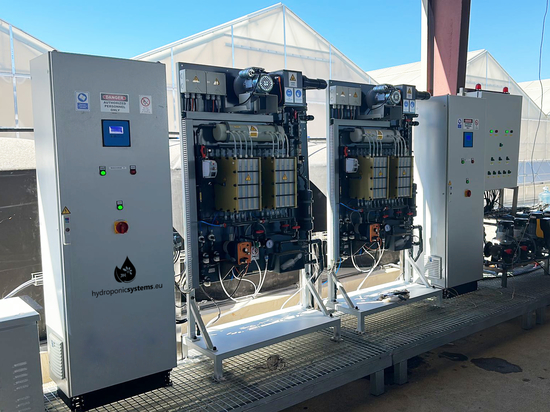
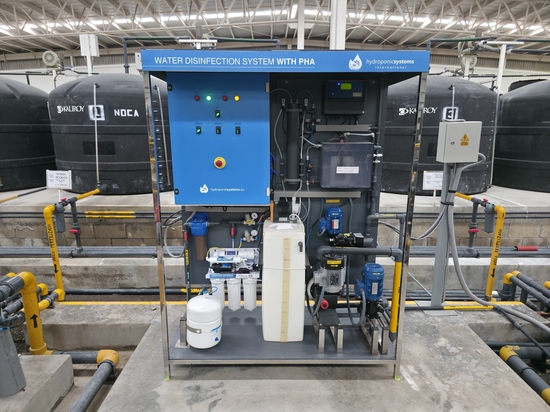
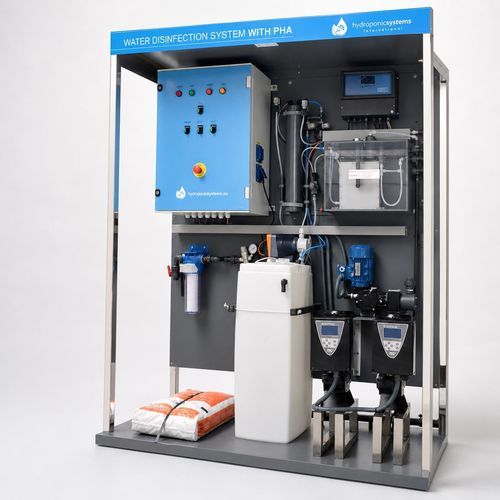
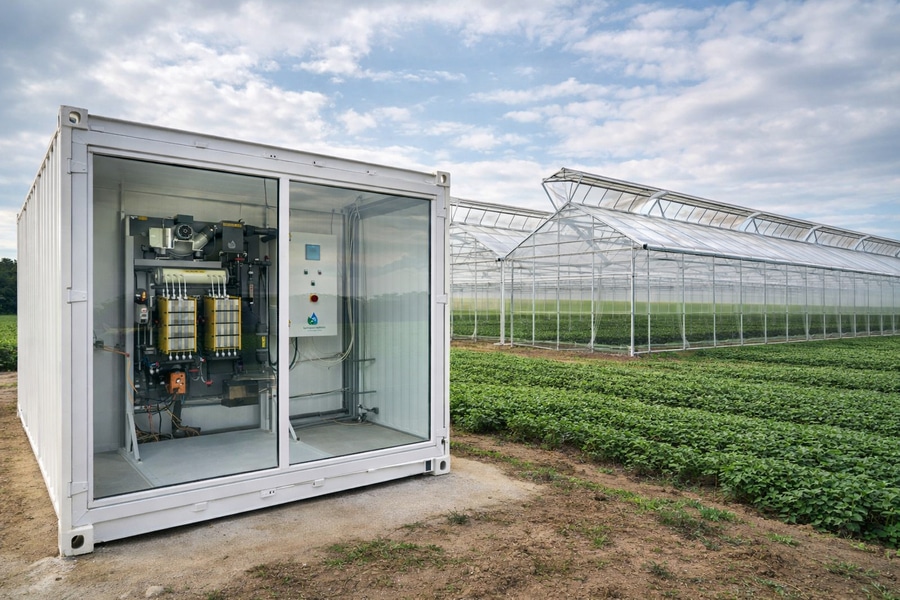
Hydroponic Systems’ continuous disinfection system is designed to act on the water before it is distributed through the installation. Its objective is to keep the microbiological load of irrigation water under control and reduce the conditions that favour biological accumulation inside the network.
The technology is based on the in situ generation of PHA, used as a continuous disinfecting agent. The system is integrated into the irrigation head, operates automatically and allows water to be treated before it reaches filters, lines, emitters or sensitive points in the installation. It can produce disinfectant continuously, use NaCl as a precursor and inject the treatment at the irrigation head before filtration.
This approach changes the way the problem is managed. Instead of relying only on corrective cleaning, the grower can apply a constant preventive strategy aimed at keeping the network in better condition throughout the production cycle.
Why one-off disinfection is not always enough
In many installations, flow problems appear gradually. First, filters become dirty more frequently. Then some drippers lose uniformity. Later, lines with irregular behaviour or irrigation points requiring manual intervention are detected.
One-off cleaning can recover part of the system’s performance, but it does not always solve the root cause. If the water continues to introduce microbiological load, organic matter or favourable conditions for internal growth, the incident tends to recur.
For this reason, in professional agricultural installations, water control must be approached as a continuous process. Disinfection at the irrigation head allows intervention before the water travels through the entire network, reducing microbiological pressure from the start and helping maintain more stable operation.
Applications in professional agriculture
This solution is suitable for operations where irrigation must work with daily precision and where downtime, blockages or recurring cleaning generate significant costs.
It can be useful in greenhouses with drip irrigation, substrate-based hydroponic crops, systems with drainage reuse, sprinkler or micro-sprinkler installations, nurseries, trays and water-sensitive areas.
It can also be adapted to different agricultural configurations, from soil-based crops to advanced hydroponic systems. Its application is viable in drip irrigation, sprinkler irrigation, hydroponic bags and NFT systems, as well as with different water sources: continental, groundwater, reclaimed water or water from leachate reuse.
Technical benefits for the installation
The value of this technology is not limited to disinfecting water. Its main advantage lies in improving the operational stability of the irrigation system.
An installation with lower microbiological pressure can operate with fewer incidents, fewer corrective cleanings and greater regularity in the distribution of water and fertilisers. In systems where irrigation uniformity is critical, this can make an important difference in crop performance.
Expected benefits include reduced microbiological pressure in the water, lower risk of biological accumulation, greater stability in filters, pipes and emitters, less dependence on corrective interventions, better preservation of irrigation uniformity and greater control in installations with recirculated water.
According to technical information published by Hydroponic Systems, continuous treatment can contribute to the destabilisation of the biofilm structure, the progressive cleaning of filters with biological accumulation and the recovery of partially clogged drippers.
Prevention rather than correction
The continuous disinfection system is especially recommended when the operation has already detected repeated signs of instability: filters that saturate frequently, drippers that lose flow, blocked sprinklers, recurring cleaning routines or problems associated with water reuse.
In these cases, the problem is usually not located at a single point in the installation. It normally responds to an internal dynamic that affects the whole network. Acting only when a blockage appears may solve the immediate incident, but it does not prevent it from happening again.
In situ PHA generation enables a more technical strategy: analysing the water, understanding the behaviour of the installation and applying continuous treatment adjusted to the real needs of the system.
Hydroponic Systems develops solutions for growers who need precision, stability and control in their irrigation systems. Interested producers can contact the company to study the behaviour of their water, review the configuration of their irrigation head and assess whether an in situ PHA generation system can help stabilise their installation.