#Farm Machinery & Equipment
Sticky Traps: Building a Smarter Pest control strategy
Integrated Pest Management (IPM) has become the most efficient and sustainable way to protect crops while maintaining ecological balance.
Rather than eliminating pests through chemical intensity, it focuses on prevention, monitoring, and selective control, combining biological, physical, and chemical tools in harmony.
In Europe’s most advanced greenhouses, IPM has become standard. The push to reduce insecticides—driven by new regulations, consumer awareness, and environmental responsibility—has accelerated a transition toward eco-friendly pest management systems.
Within this framework, chromatic sticky traps are essential. More than just pest-catching tools, they act as early-warning systems, helping growers detect infestations early and take timely, data-based decisions. For full effectiveness, traps must work in compatibility with beneficial insects like Orius, Encarsia, or Amblyseius, vital for natural pest control.
A modern IPM succeeds when technology, biology, and observation come together to achieve healthier, more productive, and sustainable crops.
Sticky Traps: Precision Tools for Monitoring
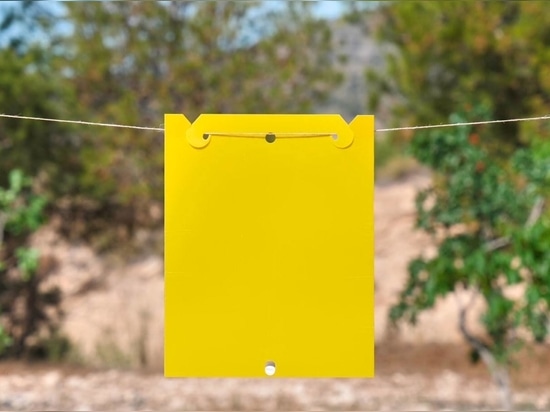
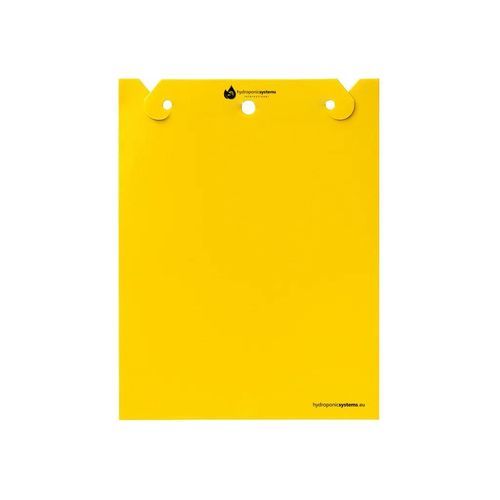
Colored sticky traps are not passive tools but diagnostic instruments that reveal pest pressure and prevent outbreaks before economic losses occur.
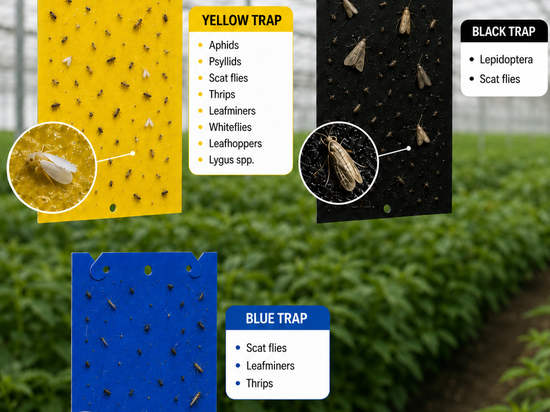
Each color targets different insect groups:
-Yellow: whiteflies (Bemisia tabaci, Trialeurodes vaporariorum) and leaf miners (Liriomyza spp.).
-Blue: thrips (Frankliniella occidentalis).
-Black: fungus gnats (Bradysia spp.) in humid or hydroponic environments.
Two key approaches:
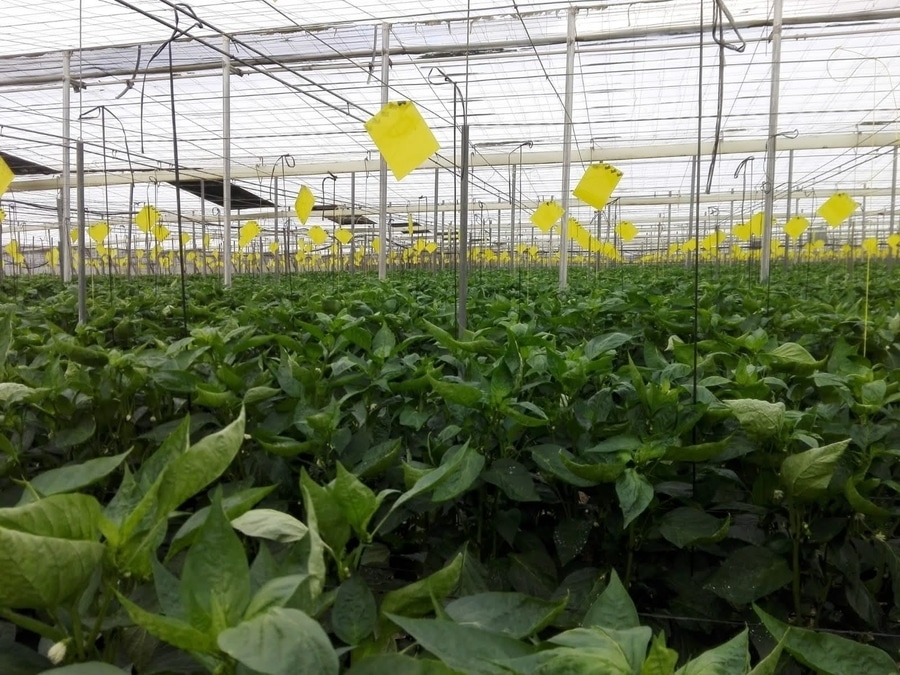
-Monitoring: few traps to track presence and dynamics.
-Mass trapping: more traps to reduce adult populations.
Unlike chemical treatments, sticky traps don’t cause resistance, leave residues, or harm pollinators, making them ideal for organic production. Weekly inspections and accurate counts are essential to refine the IPM plan.
Download our free checklist to assess trap performance in your greenhouse, tunnel, or open field.
Biological Control: The Invisible Ally
Effective IPM combines sticky traps and biological control. Traps detect and measure, while natural enemies regulate pest populations, reducing insecticide dependency.
Main beneficial groups:
-Predators (Amblyseius swirskii, Orius laevigatus) – feed on thrips, mites, and larvae.
-Parasitoids (Encarsia formosa, Aphidius colemani) – interrupt pest life cycles.
-Entomopathogens (Beauveria bassiana, Trichoderma spp.) – combat soil pests and strengthen roots.
Together, they form a balanced defense system, helping growers meet zero-residue and sustainability demands.
Integrating Sticky Traps Without Affecting Beneficials
Strategic placement ensures control without harming auxiliaries:
-Placement: at vents, entrances, and risk zones—never where beneficials are released.
-Density: adjust to crop type and pest risk.
-Height: avoid flight paths of predators or parasitoids.
-Timing: install before releasing auxiliaries for monitoring, or after for outbreak control.
-Color: use specific trap colors to avoid accidental captures.
-Maintenance: replace traps regularly to maintain adhesion and data reliability.
Tip: Keep digital or written capture logs to detect pest trends and fine-tune your IPM.
Common Mistakes to Avoid
Even strong IPM programs can fail due to poor implementation. Avoid these frequent errors:
-Using too many traps or placing them too close to crops.
-Ignoring trap replacement once saturated.
-Failing to record captures consistently.
-Not coordinating trap use with beneficial releases.
Avoiding these pitfalls ensures monitoring precision and biological balance.
Benefits of a Modern IPM Integration
Adopting an integrated approach provides clear, long-term advantages:
-Efficiency: consistent control with fewer chemical inputs.
-Sustainability: aligned with GlobalG.A.P. and organic certifications.
-Profitability: reduced costs, fewer treatments, and higher returns.
-Crop quality: stronger plants, better fruit appearance, and longer shelf life.
Final Thoughts
Modern farming demands intelligent solutions where biology and technology coexist. Properly integrated sticky traps become precision tools, enabling informed decisions and protecting crops and ecosystems alike.
Contact our team to design a tailored IPM plan with Chromatic Traps and make your production more efficient, sustainable, and profitable.