#Livestock
Housing lessons from the Youngstock Conference
The first few weeks and months of a calf’s life are crucial in supporting long-term productivity outcomes, and yet youngstock housing design is still underestimated.
In this blog, we share key insights from the National Youngstock Conference 2025, presented by Galebreaker’s animal welfare specialist, Chloe Rodriguez.
Chloe shared practical examples of how to design or re-equip farm buildings to improve ventilation, hygiene, and overall welfare, to optimise calf performance without large-scale investment.
Key factors to consider: A calf’s environment directly influences growth, health, and productivity. By optimising on the following factors, farmers lay the foundations for healthy, resilient calves – setting them up to thrive and reach their full genetic potential.
Air quality
Temperature stability
Humidity
Stocking rate
Bedding
Why ventilation matters: Ventilation is crucial to calf health and productivity.
Poor air movement, high humidity and subsequent pathogen build-up can encourage several unwanted issues such as respiratory disease, slower growth rates and reduced immunity resilience – directly impacting a calf’s overall performance.
Solutions to address poor ventilation: There are several ways to optimise natural ventilation such as Light Ridges, and side curtains, which support the exhaustion of warm stale air, and allow for fresh air to enter the livestock building.
However, in some housing, this is still not enough to create adequate air flow. Chloe suggests the use of positive pressure tube ventilation (PPTV) systems as an effective mechanical solution for delivering fresh air, both in new and existing buildings.
The VentTube Fresh, typically used in youngstock housing, provides a supply of fresh air at calf level, without creating a draught, to remove moisture, airborne pathogens, and excess heat from the environment.
Research has shown PPTV provides a significant improvement in air quality, and that a 10% reduction in pneumonia cases can repay the cost of a PPTV system in under two years (Halbach & Robertson, 2021).
Temperature and humidity: Calves, particularly those under 3 weeks old, have not yet developed the ability to regulate their body temperature, meaning optimum temperatures (ambient temperatures of 10–15°C) must be achieved.
Prolonged exposure to temperatures below their lower critical temperature (when the calf uses extra energy to keep warm), has been linked to reduced daily live weight gain.
One UK-based study found that within the optimal range, each 1°C increase in ambient temperature was associated with a 0.03 kg/day increase in weight gain (Hyde et al., 2022) .
To gain effective control of temperature and humidity in livestock buildings, the first steps involve temperature and humidity monitoring via the temperature-humidity index (THI) and ensuring effective ventilation.
Building materials, drainage, supplemental heating, draught prevention and moisture control all have a role to play in creating a stable environment.
Concerned about the temperature and humidity in your calf sheds? Check the live THI at your farm via https://thi-live.com/en or contact our animal health and welfare team for an on-farm advisory service.
Stocking density: Chloe also outlined the importance of stocking densities in calf sheds, due to the impact on air quality and disease risk.
High stocking rates increase airborne pathogen density, so Chloe recommends a tenfold increase in ventilation to maintain the equivalent air quality when the number of animals is doubled.
The bedded area and building volume per calf also play a crucial role in reducing pathogen density, with evidence from the Dairyland initiative demonstrating that less than 3.3 m² per calf results in poor air quality – even with high ventilation rates.
Social housing: How calves are grouped also requires consideration as this can impact their resilience and cognitive development.
Individually housed calves may experience higher stress and poorer immune function, but when paired, or grouped, calves tend to demonstrate better coping mechanisms, cognitive and social development, which allows calves to develop important skills, such as cooperative play and communication during the milk phase.
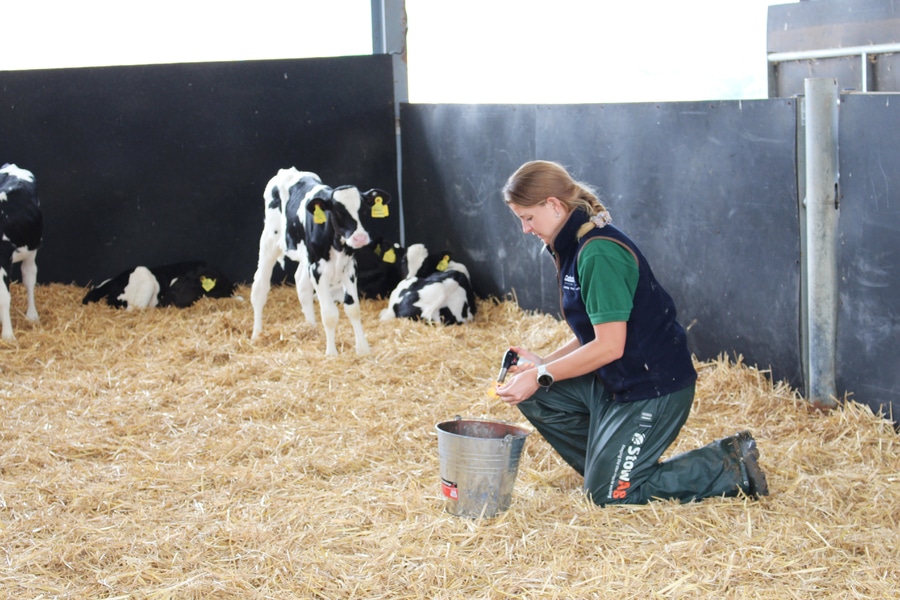
Bedding management: Bedding is not only crucial for calf comfort, but also for hygiene and therefore, disease control, Chloe emphasised.
Deep, clean straw helps maintain calf warmth, reduces pathogen exposure, and contributes to humidity control – supporting calves against risks such as calf pneumonia.
Galebreaker advisory service: Every farm is different, but all farms can enhance calf health through cost-effective changes.
Our youngstock housing assessments, led by Chloe, include:
On-site assessments of calf housing
Smoke bomb testing to evaluate air flow
Evaluation of key factors like drainage, lighting, spacing, and hygiene
A written report outlining findings and recommendations from the visit.
We can also support with calf shed designs to ensure calf health and welfare is prioritised at every stage.
For more details on our solutions and advisory services, contact our expert team.