#Industry News
Why does ridge ventilation matter in livestock buildings?
When farmers talk about improving building ventilation, there’s a part of the system that’s frequently overlooked – the exhaust.
In a naturally ventilated livestock building, the roof ridge is the main escape route for warm, stale air. If that ridge can’t ‘breathe’, the whole building struggles to ventilate properly, no matter how good the inlets are.
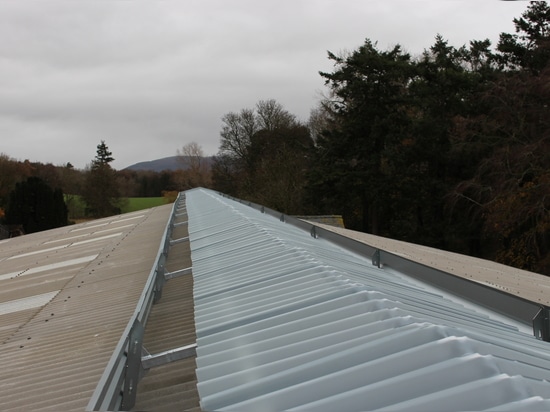
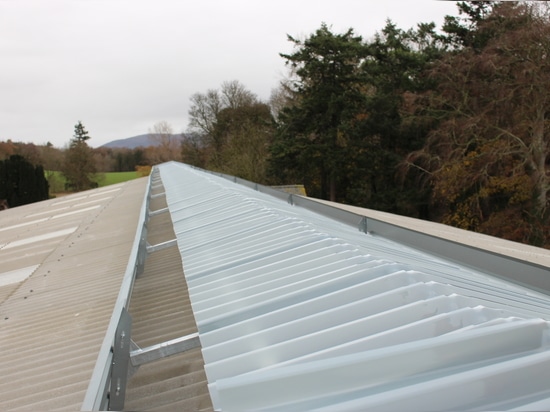
That’s the challenge Galebreaker set out to solve with VentRidge – a system designed to improve natural ventilation, especially in existing buildings.
The problem VentRidge was built to fix Will Johnson, UK & Ireland Sales Manager at Galebreaker, explains that the idea came directly from what the team kept seeing out on farm – lots of buildings with an insufficient exhaust area.
The most common culprit is the traditional cranked ridge tile setup. In reality, these exhaust gaps are usually nowhere near enough to move air at the rate livestock buildings need.
Will says that this type of construction often provides as little as 20% of what is required to ensure a building ventilates properly. This means many livestock sheds simply can’t clear heat, humidity and airborne contaminants efficiently.
Natural ventilation and the stack effect. The principle is simple:
Animals produce heat
Warm air rises
Fresh air enters building from the side inlets
Stale air exits through the ridge
That cycle maintains air exchanges in the building. But the cycle only works if the ridge allows enough air to leave. As Will puts it, Galebreaker can help customers with inlets and internal airflow products – but the exhaust has historically been the ‘elephant in the room’ for retrofit buildings.
VentRidge was created to fill that gap – with a mass-market proposition that’s simple, cost-effective, and easy to retrofit.
How VentRidge improves airflow
VentRidge is designed to do two jobs:
Provide a much bigger exhaust area
Use outside wind to actively draw air out
A key part of the design is the use of baffles. As wind passes across the top of the ridge, the baffles encourage the airflow to accelerate and create a low-pressure zone. That low pressure increases draw – effectively boosting the ‘suction’ that helps stale air leave the building.
This matters in the UK, because we have consistent winds to work with (around 4–5 metres per second average wind speeds). VentRidge is engineered to take advantage of those crosswinds rather than simply relying on warm air drifting out.
‘Up to four times better’ – what that actually means
Galebreaker didn’t just rely on theory. Will explains that the business used CFD (Computational Fluid Dynamics) modelling to allow them to simulate wind moving across ridge designs and estimate exhaust performance.
Using this analysis, the team found that over a given length (for example, around 30 metres), VentRidge performed up to four times better than a traditional ridge tile arrangement when it comes to exhausting air.
In practical terms, that means faster air changes and a better chance of keeping internal conditions stable.
Designed for retrofit – safer, simpler installation
One of the biggest barriers to upgrading ridges in older buildings is the difficulty (and cost) of working at height on fragile roof surfaces.
VentRidge was developed with retrofit reality in mind:
It’s designed to suit typical ridge purlin spacing (with a design range that copes with about 500–800mm).
It can be installed in a way that reduces the need to ‘clamber about’ on the roof.
The focus is on a simple product with no moving parts, aimed at being practical to fit and good value over the lifetime of the building.
The end result is meaningful ventilation improvement without forcing a farmer into big structural work, expensive mechanical ventilation, or rebuilding a shed from scratch.
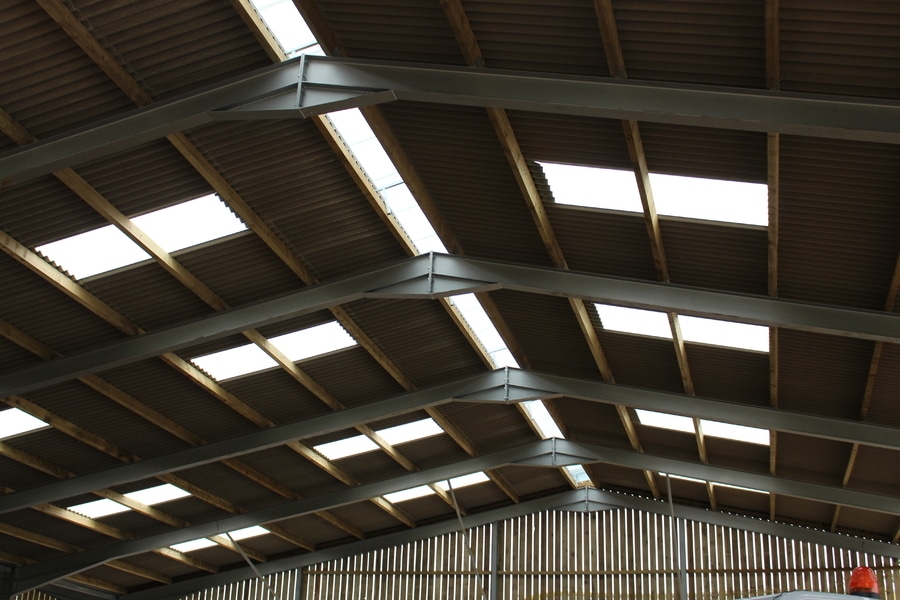
VentRidge can be installed from insdide the building
The benefits that matter to farmers
When asked the number one selling point, Will’s answer isn’t ‘features’ – it’s outcomes:
A massive improvement to natural ventilation in buildings with poorly designed ridges
Proven performance, not guesswork
Cost-effective retrofit, improving what’s already there rather than spending elsewhere
That last point is crucial. Better natural ventilation can reduce the need to solve problems with more costly interventions later on – from adding fans, to dealing with the knock-on health and welfare effects of poor air quality.
If you’re investing in better housing conditions, the ridge is one of the highest-impact places to start – because it’s the part that lets the building breathe.
Call a member of the team to find out more about retrofitting a VentRidge: 01531 637 900 or email [email protected]