#Farm Machinery & Equipment
Screw Press Separators: Turning Slurry into Manageable Solid and Liquid Fractions with SEPCOM X
Screw Press Separators for Slurry and Digestate | SEPCOM X
Screw press separators play a central role wherever animal farms and biogas plants need to reduce the volume of manure and slurry, recover a more manageable solid fraction and improve the handling of the remaining liquid phase. Instead of treating slurry or digestate as one homogeneous stream, mechanical separation divides it into two fractions with different physical characteristics and different downstream options. This can simplify storage, pumping, transport, nutrient management and further treatment.
The principle is especially relevant in livestock farming, where manure handling influences daily logistics as much as agronomic planning. A material that is difficult to pump, store or distribute can become easier to manage once part of its suspended solids has been removed. In biogas plants, the same approach can support digestate treatment and create a more controlled interface between digestion, storage and subsequent nutrient-management stages.
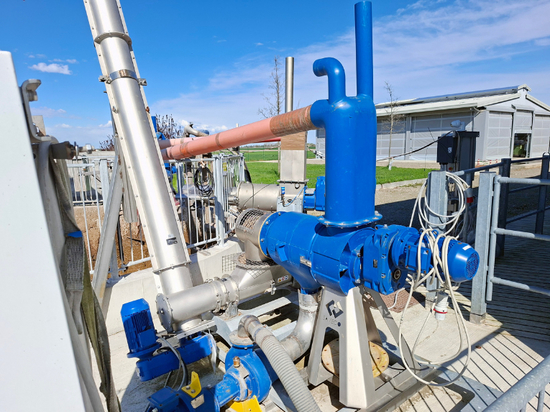
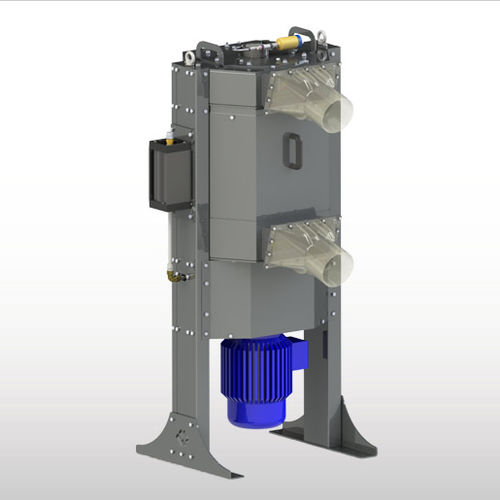
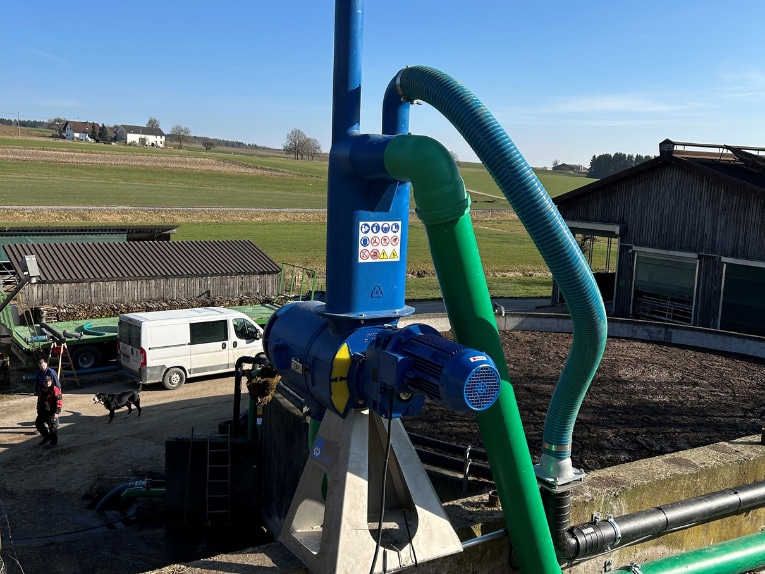
SEPCOM X, developed by SAVECO, the Farming & Bioenergy division of WAMGROUP, is an advanced screw press separator designed for efficient solids-liquid separation. Its development focuses not only on separation performance, but also on the practical realities of installation, daily operation and maintenance. The official SAVECO product information highlights high dry matter content in the separated solid, quick assembly, easy access to the core of the machine and a design conceived to keep routine intervention straightforward.
How screw press separation works
A screw press separator uses a rotating screw inside a cylindrical screening section. The incoming slurry is conveyed along the screen while the screw generates progressive compression. Liquid passes through the screen openings, whereas the retained solids continue towards the outlet. The process therefore combines transport, filtration and mechanical dewatering in one continuous operation.
The balance between these three functions is critical. If the incoming material is too variable, the pressure profile inside the separator may change. If the outlet offers too little resistance, the solids can leave too wet. If the resistance is excessive, throughput may fall and mechanical load may increase. Effective separation depends on matching the machine to the properties of the slurry rather than treating all manure or digestate as identical.
The screw itself also contributes to screen cleaning. As material advances, the moving screw continuously sweeps the internal screening surface. This limits the accumulation of solids and helps preserve the open area required for liquid drainage. The result is a compact, continuous process that can operate without the cycle-by-cycle handling associated with batch dewatering systems.
Why dry matter content matters
The separated solid fraction is easier to handle when it contains less free water. Higher dry matter content reduces the quantity of liquid transported together with the solids and can improve stackability, storage and onward handling. In practical terms, this can mean less volume to move, easier loading and a clearer distinction between the solid and liquid streams.
For livestock farms, the separated solid may be directed to storage, further treatment, composting or another authorised use depending on the farm strategy and local regulations. The liquid fraction can be stored, pumped, further refined or integrated into nutrient-management processes. In biogas applications, separation can also support subsequent treatment steps by reducing the suspended solid load.
It is important to distinguish mechanical separation from complete treatment. A screw press removes part of the suspended solids and associated water from the solid fraction, but dissolved nutrients remain primarily in the liquid. The agronomic and environmental value therefore comes from creating two more controllable streams, not from eliminating nutrients from the system.
SEPCOM X: designed around real operating needs
The SEPCOM X concept is built around versatility. SAVECO positions the machine as a solution that can be integrated into a wide range of cattle-breeding applications, combining a favourable cost-benefit ratio with ease of use, simple installation and low maintenance requirements. This balance is important because the separator is often expected to operate every day in an environment where labour availability and maintenance time are limited.
Easy access to the machine core is a key feature. In any screw press separator, the screw and screening section are the components most directly exposed to the processed material. Designing the machine so that these parts can be reached quickly reduces the time required for inspection, cleaning and replacement. It also makes preventive maintenance easier to plan before performance deteriorates.
The quick assembly system follows the same logic. A separator should not require a complex, highly specialised intervention every time a wear component needs attention. Simplifying access and assembly helps reduce downtime and makes routine service more predictable. SAVECO also emphasises recyclable plastic parts as part of the SEPCOM X concept, supporting a reduced environmental footprint at component level.
No separator should be selected from nominal capacity alone. Slurry behaviour changes with animal diet, dilution water, bedding material, retention time and season. Digestate characteristics can also vary with feedstock and digester operation. A robust selection process therefore starts with a representative description of the material and the intended operating duty.
Feeding the separator correctly
Stable feed conditions are essential for consistent performance. A screw press separator normally receives material through a pump or controlled hydraulic arrangement. The feed system should provide sufficient flow without creating violent pressure fluctuations. Excessive variation can change the filling of the separator and the amount of compression developed at the outlet.
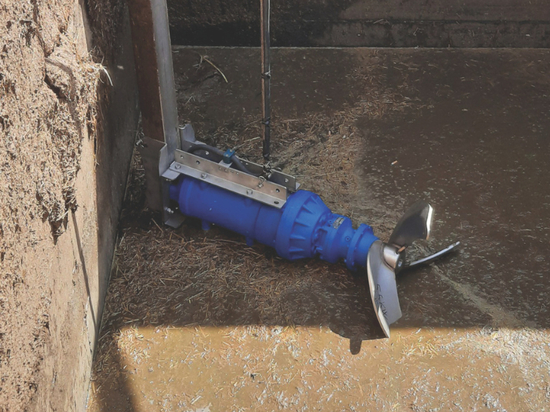
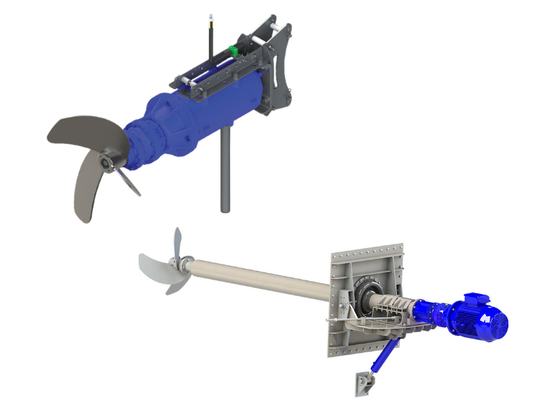
Where the incoming slurry is stored in a reception or balancing tank, agitation may be required to maintain a representative suspension. However, mixing should be appropriate to the material. The aim is to prevent heavy solids from settling while avoiding unnecessary energy use or changes to fibre structure.
The separator should also be protected from foreign objects that can damage the screw or screen. Stones, metal fragments and oversized debris should be prevented from entering the feed line. The complete system must therefore be designed as a process, with pumping, mixing, protection and separation working together.
What happens to the solid fraction?
Once the material exits the screw press, the solid fraction must be collected and moved away from the machine without creating back pressure at the outlet. Depending on the installation, solids may fall directly into a storage area, onto a concrete pad, into a trailer or onto a conveyor.
The physical character of the separated solid can make handling significantly easier than the original slurry. A more stackable fraction can be moved with conventional farm machinery, transported with less free liquid and stored in a smaller dedicated area than the same quantity of unseparated slurry.
The final route depends on farm practice and legislation. The separator itself does not determine whether solids are reused, composted, exported or subjected to further treatment. Its role is to produce a more manageable fraction that can enter the selected downstream strategy.
Managing the liquid fraction
The liquid leaving the screen contains water, dissolved nutrients and fine particles that are small enough to pass through the selected screening section. Its lower coarse-solids content can make pumping and storage easier and may reduce sediment accumulation compared with untreated slurry.
For applications requiring a cleaner liquid, mechanical separation can be followed by additional refinement. SAVECO’s wider portfolio includes microfiltration technologies intended to further reduce fine suspended solids in already separated liquids. This illustrates an important process principle: one separation stage does not have to solve every treatment objective.
The correct sequence depends on the desired end use. A farm focused on storage reduction may require only primary separation. A site preparing liquid for more demanding distribution or treatment may benefit from a second stage. Designing the process around the final objective avoids unnecessary equipment while still achieving the required quality.
Operational benefits of screw press separators
The first operational benefit is volume management. By transferring part of the solids into a separate fraction, the remaining liquid becomes easier to pump and store. The solid fraction can be handled independently, reducing the need to move water together with every tonne of material.
A second benefit is process flexibility. Separation creates two streams that can follow different routes. This supports more targeted nutrient management, allows further treatment to focus on the fraction that needs it and can simplify transport logistics.
A third benefit is continuity. Screw press separators operate continuously, which allows them to be integrated into automated farm or biogas processes. Buffer tanks, level control, pumps and downstream conveyors can be coordinated so that separation takes place according to actual process demand rather than only through manual intervention.
Maintenance: access is part of performance
Performance over time depends on the condition of the screw, screen and outlet system. Wear, deposits or damage can change the pressure profile and reduce both throughput and dry matter content. Routine inspection is therefore part of normal operation, not an exceptional activity.
This is where the SEPCOM X emphasis on easy access becomes particularly relevant. Fast access to the core of the machine allows operators to inspect wear surfaces, clean the screening area and intervene before a small issue becomes a prolonged stoppage. A quick assembly concept also helps make scheduled replacement more efficient.
Maintenance frequency should reflect the actual processed material. Abrasive particles, high operating hours or variable slurry can require more frequent attention. Operators should follow the official use and maintenance documentation, particularly for safe isolation before opening or servicing the machine.
Integrating SEPCOM X into a complete manure-management line
A screw press separator is most effective when the upstream and downstream equipment is selected as part of one system. Upstream, this may include a collection pit, agitator, chopper pump, transfer pipeline and balancing tank. Downstream, the process can include solids conveying, storage, microfiltration or other nutrient-management technologies.
SAVECO develops equipment across these stages, allowing the separation step to be considered together with pumping, agitation and further liquid treatment. This reduces interface uncertainty and helps create a coherent process layout.
The same principle applies to biogas plants. Digestate separation interacts with digester operation, storage capacity, pumping and nutrient use. A correctly integrated separator should support the process rather than become a bottleneck between biological treatment and final digestate management.
Technical FAQs about screw press separators
1) What is a screw press separator? It is a continuous mechanical device that uses a rotating screw and a screen to separate a pumpable slurry into a solid fraction and a liquid fraction.
2) What materials can screw press separators process? They are commonly used for livestock slurry, manure and biogas digestate. Suitability always depends on pumpability, solids content and the physical structure of the material.
3) Why is dry matter content important? A drier solid fraction contains less free water, which can improve stackability, transport and storage.
4) Does a screw press remove dissolved nutrients? No, it doesn’t. Its main action is mechanical removal of suspended solids. Dissolved nutrients remain largely in the liquid phase.
5) Why is feed consistency important? Stable feed helps maintain predictable filling, compression and throughput. Large variations can change separation performance.
6) What is the advantage of easy access to the separator core? It reduces the time needed for inspection, cleaning and replacement of wear components, supporting planned maintenance and higher availability.
7) Can separation be followed by another treatment stage? Yes. The separated liquid can be further refined, for example through microfiltration, when the downstream use requires lower suspended-solids content.
8) Is SEPCOM X suitable only for cattle farms? SAVECO positions SEPCOM X particularly for cattle-breeding applications, while the exact suitability of any feed material should be confirmed with the manufacturer.
A practical route to more controlled slurry management
Screw press separators are valuable because they transform one difficult stream into two fractions that can be managed independently. The process can reduce storage pressure, improve pumping conditions, create stackable solids and prepare the liquid phase for subsequent use or treatment. SEPCOM X develops this principle around practical installation and maintenance needs, combining efficient separation with easy access, quick assembly and a design focused on long-term operability.
Explore SEPCOM X and the full SAVECO range of screw press separators on the new website, and contact the local specialist to identify the most suitable configuration for your slurry, digestate and process requirements.