#Farm Machinery & Equipment
Slurry Management and Biogas: How CHIOR® HMTB Redefines Mixing Efficiency
In modern livestock farming and biogas production, slurry and digestate management is no longer just a matter of handling waste.
In modern livestock farming and biogas production, slurry and digestate management is no longer just a matter of handling waste. It has become a strategic part of farm efficiency, nutrient recovery and renewable energy production.
Livestock slurry and digestate are valuable resources, but their full potential can only be achieved when every stage of the process is properly controlled. Among the most important factors is mixing, a process that directly affects storage efficiency, pumping reliability, separation performance and, in biogas plants, the stability of anaerobic digestion.
With CHIOR® HMTB by SAVECO, a WAMGROUP brand, slurry and digestate mixing becomes a practical tool for improving operational performance, supporting process stability and helping farms and biogas operators make better use of organic effluents.
The daily challenge of slurry and digestate management
Slurry naturally tends to separate during storage. Solids can settle at the bottom of the tank, liquid fractions can separate, and surface crusts may form over time. This behaviour can create several operational issues, from pumping difficulties to uneven field application and reduced efficiency in downstream treatment processes.
In livestock farming, poor homogenisation can affect the agronomic value of slurry, because nutrients may not be distributed evenly. In biogas plants, insufficient mixing can reduce process stability, limit contact between biomass and microorganisms, and negatively influence the overall efficiency of digestion.
For this reason, effective mixing should not be considered an accessory function. It is a central requirement for transforming slurry and digestate into manageable, reusable and valuable resources.
Mixing as a driver of process efficiency
A well-designed mixing system keeps solids in suspension, reduces the formation of deposits and surface crusts, and supports a more uniform distribution of nutrients throughout the tank. This makes slurry easier to pump, improves consistency before separation or field application, and helps reduce operational interruptions.
In biogas applications, mixing plays an equally important role. A homogeneous substrate supports stable digestion conditions and helps the biological process work more efficiently. By improving the contact between organic matter and the microbial population, effective mixing contributes to more consistent process performance and can support improved biogas production.
The goal is not simply to move material inside a tank. The goal is to create the right conditions for a stable, efficient and predictable process.
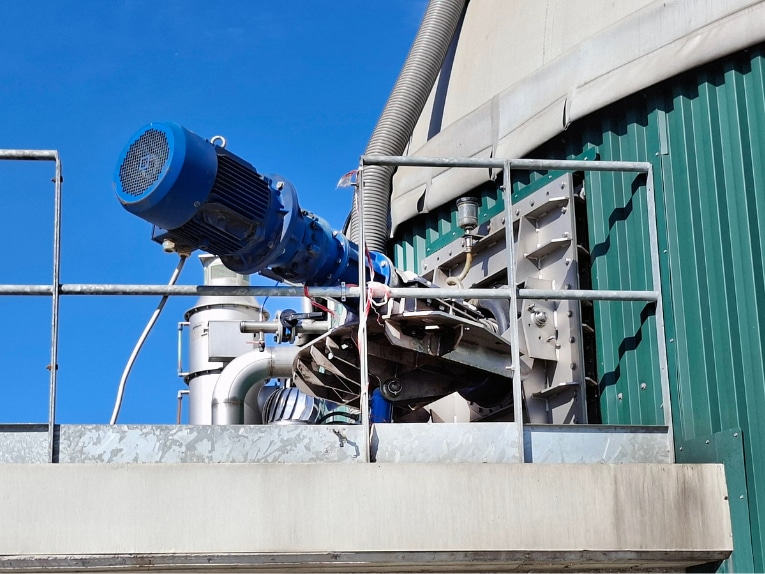
CHIOR® HMTB: horizontal mixing technology for demanding applications
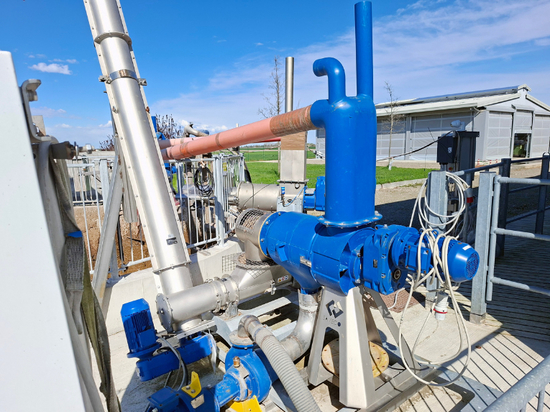
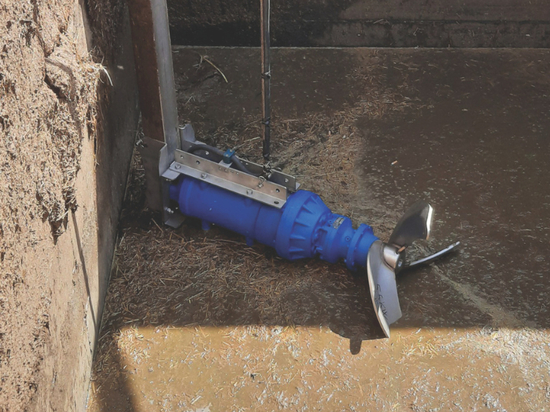
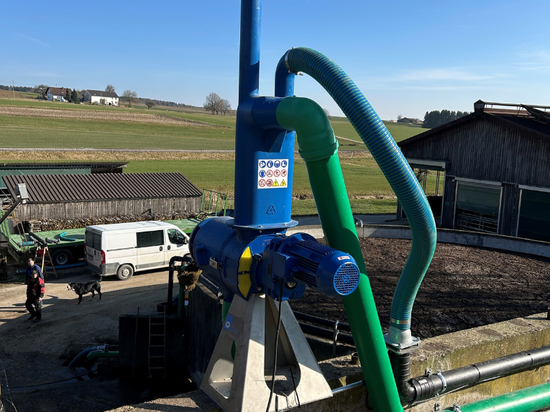
CHIOR® HMTB by SAVECO is designed for slurry storage tanks, digestate handling and biogas applications. Its purpose is to provide efficient mixing in environments where organic effluents may contain a significant solids fraction and where process reliability is essential.
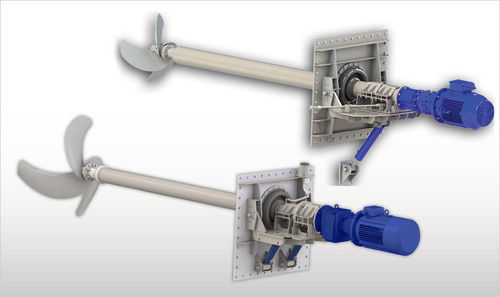
The horizontal configuration supports uniform material circulation inside the tank, helping prevent sedimentation and crust formation. This makes the system suitable for livestock farms, biogas plants and digestate treatment facilities where slurry and digestate must remain homogeneous before pumping, separation, reuse or further treatment.
By focusing on robust operation and effective material movement, CHIOR® HMTB helps operators manage one of the most critical stages in the slurry and biogas process: keeping the substrate consistent over time.
Better slurry, better separation, better reuse
Efficient mixing has a direct impact on the entire slurry management chain. When the material is properly homogenised, pumping becomes more reliable and downstream equipment can operate under more stable conditions.
For farms using solid-liquid separation, a more consistent feed can improve process regularity and help achieve better separation results. For agronomic reuse, uniform nutrient distribution supports more controlled field application. For biogas facilities, homogeneous digestate handling helps maintain a stable process environment and simplifies the management of storage and treatment stages.
This integrated view is central to SAVECO’s approach. CHIOR® HMTB can work as part of a broader process line that may include pumps, separators and treatment systems, contributing to the optimisation of the entire slurry and digestate management cycle.
Supporting sustainability and farm profitability
Efficient slurry management is increasingly important for farms looking to reduce environmental impact, recover nutrients and improve the value of organic effluents. In biogas applications, it also supports the production of renewable energy from agricultural and livestock residues.
By helping reduce crust formation, improve homogeneity and support process stability, CHIOR® HMTB contributes to a more efficient use of slurry and digestate. The result is a practical technology that supports both environmental goals and day-to-day operational performance.
For livestock farms and biogas plants, better mixing means better control. And better control means a more reliable, more sustainable and more profitable process.
A practical solution for modern livestock and biogas operations
Slurry and digestate management is now a key factor in modern agriculture. It influences farm efficiency, nutrient recovery, renewable energy production and the long-term sustainability of livestock operations.
With CHIOR® HMTB, SAVECO provides a robust and practical mixing solution for farms, biogas plants and digestate treatment systems. By combining WAMGROUP’s engineering experience with SAVECO’s specialised know-how in effluent treatment, the system helps turn mixing into a real efficiency driver.
Discover CHIOR® HMTB at agri.saveco-water.com and contact SAVECO for tailored advice on slurry and digestate management.